Across collections / 03 / A record comparison
Plaster and Bronze
Auguste Rodin’s monument The Burghers of Calais generated full-scale studies, separate heads, plasters, and bronzes across decades. Compare how Chicago’s full-length plaster and Cleveland’s bronze head record two distinct material states of the project.
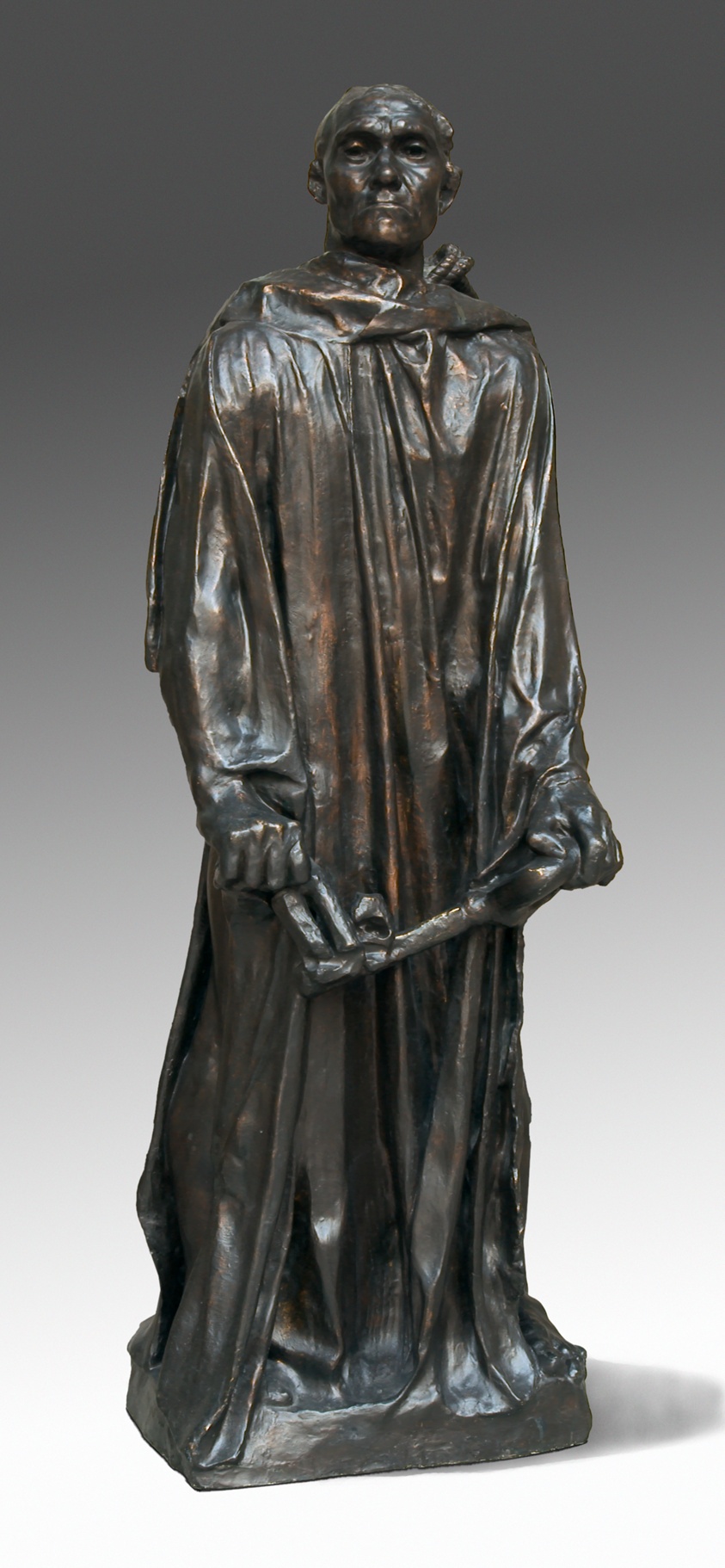
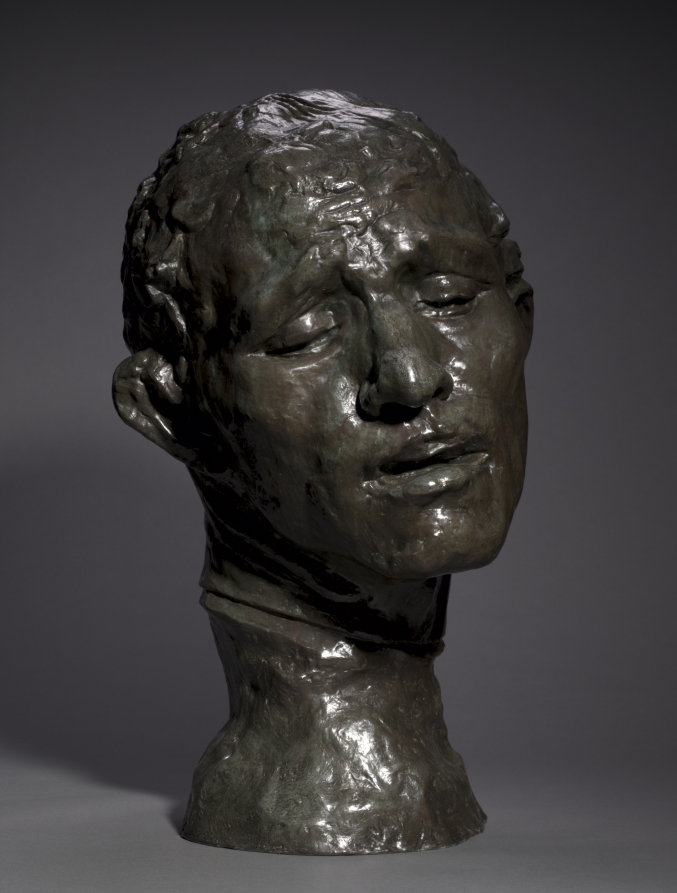
Two figures, two materials
Matte white plaster beside dark cast bronze.
Compare how light behaves across the chalky, absorptive surface of Chicago’s plaster figure of Jean d’Aire and the specular, light-catching ridges of Cleveland’s bronze head of Pierre de Wissant.
The Art Institute of Chicago
- Object number
- 1893.187
- Catalogue date
- Modeled 1889
- Medium
- Plaster
- Dimensions as recorded
- 208.3 × 66 cm (82 × 26 in.)
- Collection credit
- Gift of Mrs. Addie M. Hall Ellis
The Cleveland Museum of Art
- Object number
- 1920.120
- Catalogue date
- 1886
- Medium
- bronze
- Dimensions as recorded
- Overall: 83.5 x 47 x 55.3 cm (32 7/8 x 18 1/2 x 21 3/4 in.)
- Collection credit
- The Norweb Collection
01 / Look
Notice what plaster reveals and bronze deepens.
In the Art Institute of Chicago’s full-length plaster of Jean d’Aire (1893.187), pale shadows gather gently in the vertical hollows of the sackcloth robe and clenched hands.
In the Cleveland Museum of Art’s bronze Heroic Head of Pierre de Wissant (1920.120), dark metal amplifies the contrast between deep sockets and bright highlights on the brow and cheek.
02 / Read
Keep modeling dates and object histories distinct.
In sculptural records, a single date rarely tells the whole story. Chicago’s record specifies “Modeled 1889” for the plaster figure acquired in 1893; Cleveland’s record dates the design of the heroic head to 1886 and records its gift in 1920.
Reading both records side by side helps separate the shared monument commission from the specific medium, scale, and acquisition history of each museum object.
What this comparison can—and cannot—tell us
These two works depict different figures from Rodin’s Burghers of Calais project (Jean d’Aire in plaster; Pierre de Wissant in bronze). Comparing them illuminates how plaster and bronze register sculptural modeling and how museums catalogue multi-stage sculptural production; it does not claim one object was cast directly from the other.