Artologium

Collections, in conversation

Start in one collection.
Follow a question beyond it.

Many collections. Many ways to look. Enter through an object, stay with a question, and let the next work take you somewhere else.

01 / New York / 49 selected works

The Metropolitan Museum of Art

An Artologium question

What can a vessel carry besides water?

Boats travel around a rounded jar. A wave gathers on paper. Small cotton squares become a field. Begin with a mark, then follow what happens when its surface changes.

A five-minute looking route
Look closer
A vessel carrying boatsMaker unrecorded · ca. 3500–3300 BCEThe Metropolitan Museum of Art · CC0
Image & source
Red-brown boats and repeated marks travel around a pale rounded vessel.

Clay / Source record

A vessel carrying boats

Read the catalogue and evidence →
Maker
Maker unrecorded
Date
ca. 3500–3300 BCE
Medium
Pottery, paint
Collection
The Metropolitan Museum of Art
Accession
36.1.121
Credit
Rogers Fund, 1936
Rights
Public domain · CC0

Public domain · CC0. Resized and converted to WebP; no recoloring. Homepage details may be cropped; work record presents the full image. Editorial views may show a detail.

Institution’s full-resolution image ↗Museum reuse policy ↗Original museum record ↗Read the CC0 dedication ↗

Full supplied image / A looking prompt

A boat, held in a curve.

Follow the long painted hull, then the repeated strokes beneath it. The image bends with the vessel; this crop brings a single painted passage into view.
Original museum record ↗
02 / Find
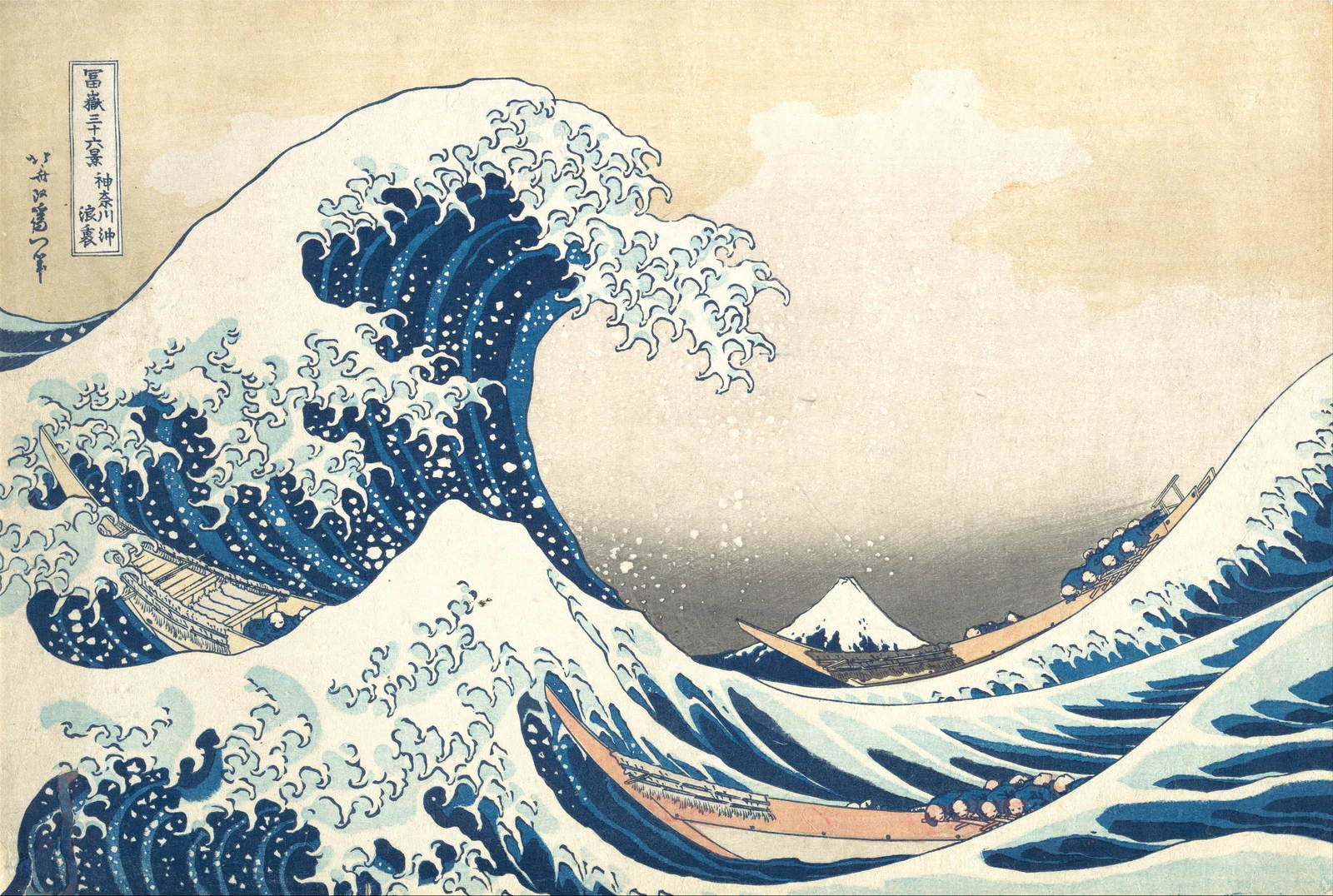
A wave curls over three long boats; Mount Fuji sits small beneath its arc.
Under the Wave off KanagawaKatsushika Hokusai · ca. 1830–32The Metropolitan Museum of Art · CC0
Image & source
A wave curls over three long boats; Mount Fuji sits small beneath its arc.

Print / Source record

Under the Wave off Kanagawa

Read the catalogue and evidence →
Maker
Katsushika Hokusai
Date
ca. 1830–32
Medium
Woodblock print; ink and color on paper
Collection
The Metropolitan Museum of Art
Accession
JP1847
Credit
H. O. Havemeyer Collection, Bequest of Mrs. H. O. Havemeyer, 1929
Rights
Public domain · CC0

Public domain · CC0. Resized and converted to WebP; no recoloring. Homepage details may be cropped; work record presents the full image. Editorial views may show a detail.

Institution’s full-resolution image ↗Museum reuse policy ↗Original museum record ↗Read the CC0 dedication ↗

Find the small mountain beneath the wave. Notice how scale changes where your eye settles.
03 / Repeat
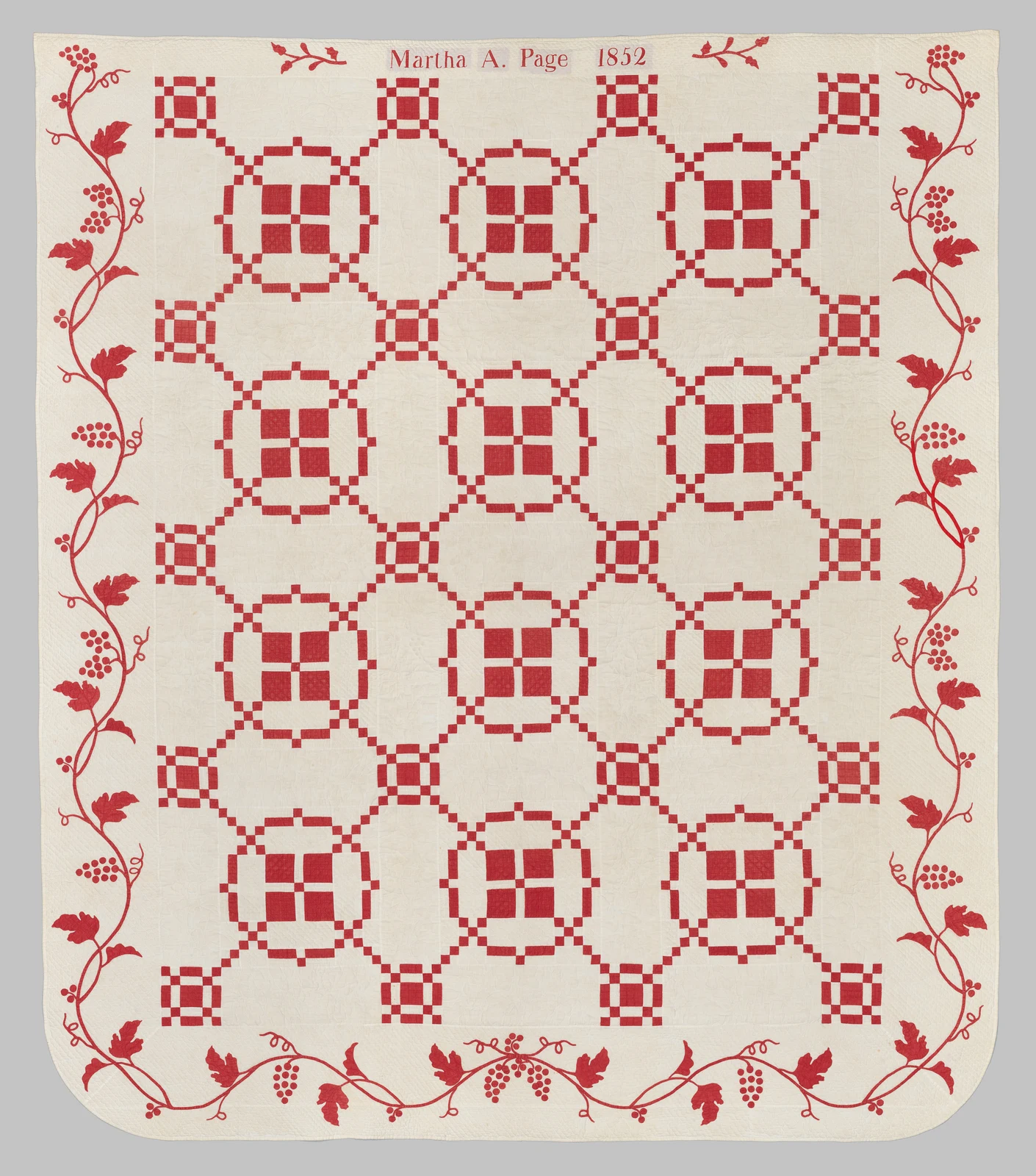
Small red and white squares form a repeating lattice across a cotton quilt.
Burgoyne Surrounded quiltMartha A. Page · 1852The Metropolitan Museum of Art · CC0
Image & source
Small red and white squares form a repeating lattice across a cotton quilt.

Textile / Source record

Burgoyne Surrounded quilt

Read the catalogue and evidence →
Maker
Martha A. Page
Date
1852
Medium
Cotton
Collection
The Metropolitan Museum of Art
Accession
2017.17
Credit
Purchase, Louis and Virginia Clemente Foundation Inc. Gift, 2017
Rights
Public domain · CC0

Public domain · CC0. Resized and converted to WebP; no recoloring. Homepage details may be cropped; work record presents the full image. Editorial views may show a detail.

Institution’s full-resolution image ↗Museum reuse policy ↗Original museum record ↗Read the CC0 dedication ↗

Choose one red square and follow its neighbours. At what point does a piece become a pattern?

Across collections / 01

Which Great Wave?

One familiar design. Two museum objects. What changes when you stop treating an image as a single thing?

The MetJP1847

Print
Image & source
A wave curls over three long boats; Mount Fuji sits small beneath its arc.

Print / Source record

Under the Wave off Kanagawa

Read the catalogue and evidence →
Maker
Katsushika Hokusai
Date
ca. 1830–32
Medium
Woodblock print; ink and color on paper
Collection
The Metropolitan Museum of Art
Accession
JP1847
Credit
H. O. Havemeyer Collection, Bequest of Mrs. H. O. Havemeyer, 1929
Rights
Public domain · CC0

Public domain · CC0. Resized and converted to WebP; no recoloring. Homepage details may be cropped; work record presents the full image. Editorial views may show a detail.

Institution’s full-resolution image ↗Museum reuse policy ↗Original museum record ↗Read the CC0 dedication ↗

Katsushika Hokusai · ca. 1830–32 · CC0
Source record ↗

Chicago1928.1086

Print
Image & source
A color woodblock print of a large crashing wave, looms over two narrow boats full of people. Mt Fuji in the background. There is a faint peach colored sky.

Print / Source record

Under the Wave off Kanagawa (Kanagawa oki nami ura), also known as The Great Wave, from the series "Thirty-Six Views of Mount Fuji (Fugaku sanjurokkei)"

Read the catalogue and evidence →
Maker
Katsushika Hokusai 葛飾 北斎 Japanese, 1760-1849
Date
1830/33
Medium
Color woodblock print; oban
Collection
The Art Institute of Chicago
Accession
1928.1086
Credit
Clarence Buckingham Collection
Rights
Public domain · CC0

Public domain · CC0. Unchanged copy of the institution’s verified web image; smaller responsive JPEGs are resized derivatives. Full-resolution image remains linked to the institution. Editorial views may show a detail.

Institution’s full-resolution image ↗Museum reuse policy ↗

Institutional rights designation checked 2026-10-17. Catalogue descriptions are normalized from source data; visual interpretation may be unassessed.

Original museum record ↗Read the CC0 dedication ↗

Katsushika Hokusai · 1830/33 · CC0
Source record ↗

Two complete supplied images

Same design. Separate records.

Open either image for the original view and source. The display sizes are not physical scale; image differences alone cannot establish condition or printing order.

Read the two records together

02 / Cleveland / 804 selected works

The Cleveland Museum of Art

An Artologium question

When does furniture become sculpture?

A table asks to be walked around. An alabaster figure turns cloth into volume. A painted portrait holds a person still. Here, start with the shape of a presence.

A five-minute looking route
Look closer
Tea TableCarlo Bugatti (Italian, 1856–1940) · c. 1907The Cleveland Museum of Art · CC0
Image & source
Tea Table — Furniture and woodwork by Carlo Bugatti (Italian, 1856–1940). inlaid wood (mahogany?), cast and gilded bronze mounts, inlays of ivory or bone, metal, and mother-of-pearl (marine mussels or pearl oysters).

Furniture and woodwork / Source record

Tea Table

Read the catalogue and evidence →
Maker
Carlo Bugatti (Italian, 1856–1940)
Date
c. 1907
Medium
inlaid wood (mahogany?), cast and gilded bronze mounts, inlays of ivory or bone, metal, and mother-of-pearl (marine mussels or pearl oysters)
Collection
The Cleveland Museum of Art
Accession
1991.45
Credit
Leonard C. Hanna Jr. Fund
Rights
Public domain · CC0

Public domain · CC0. Institution-provided display image; no Artologium pixel changes. Original-resolution image linked at source. Editorial views may show a detail.

Institution’s full-resolution image ↗Museum reuse policy ↗

Institutional rights designation checked 2026-10-17. Catalogue descriptions are normalized from source data; visual interpretation may be unassessed.

Original museum record ↗Read the CC0 dedication ↗

Full supplied image / A looking prompt

Where support becomes ornament.

Look at the curved supports beneath the tabletop. Follow one line downward and notice where its structural role becomes difficult to separate from its shape.
Original museum record ↗
02 / Fold
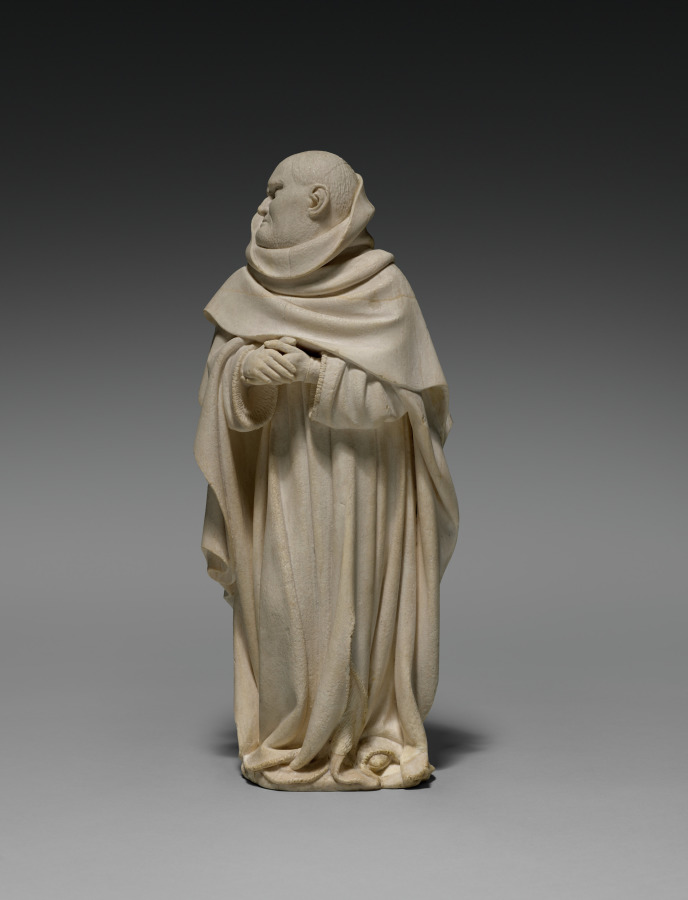
Mourner from the Tomb of Philip the Bold, Duke of Burgundy (1364–1404) — Sculpture by Claus de Werve (Netherlandish, 1380–1439). vizille alabaster.
Mourner from Philip the Bold’s tombClaus de Werve (Netherlandish, 1380–1439) · 1404–10The Cleveland Museum of Art · CC0
Image & source
Mourner from the Tomb of Philip the Bold, Duke of Burgundy (1364–1404) — Sculpture by Claus de Werve (Netherlandish, 1380–1439). vizille alabaster.

Sculpture / Source record

Mourner from the Tomb of Philip the Bold, Duke of Burgundy (1364–1404)

Read the catalogue and evidence →
Maker
Claus de Werve (Netherlandish, 1380–1439)
Date
1404–10
Medium
vizille alabaster
Collection
The Cleveland Museum of Art
Accession
1958.67
Credit
Bequest of Leonard C. Hanna Jr.
Rights
Public domain · CC0

Public domain · CC0. Institution-provided display image; no Artologium pixel changes. Original-resolution image linked at source. Editorial views may show a detail.

Institution’s full-resolution image ↗Museum reuse policy ↗

Institutional rights designation checked 2026-10-17. Catalogue descriptions are normalized from source data; visual interpretation may be unassessed.

Original museum record ↗Read the CC0 dedication ↗

Follow a fold from the hood to the feet. How much of a body can you sense without seeing it?
03 / Pause
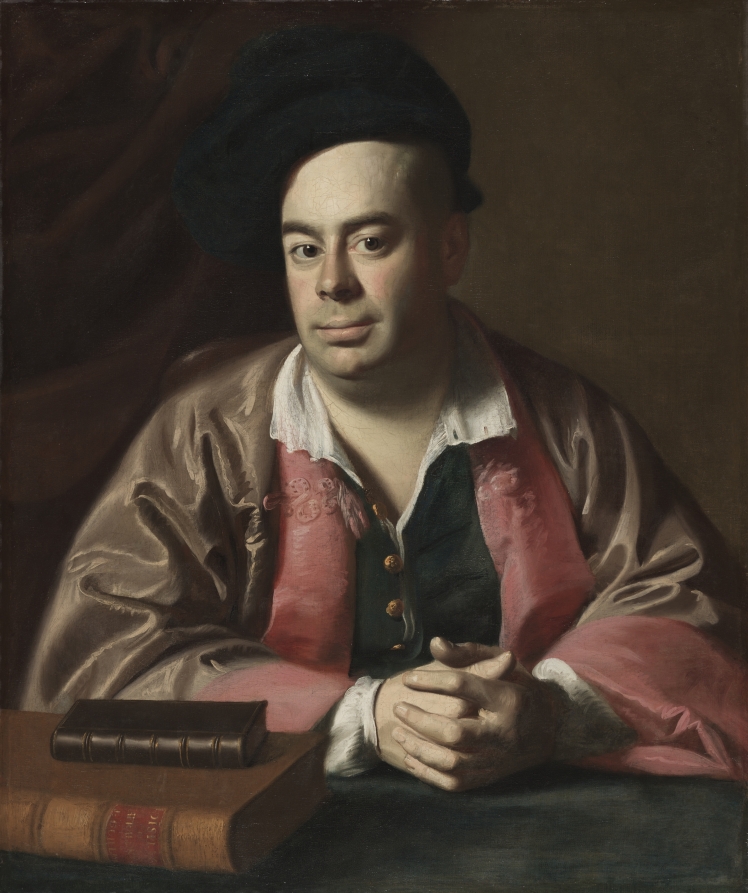
Nathaniel Hurd — Painting by John Singleton Copley (American, born The Thirteen Colonies, 1738–1815). oil on canvas.
Nathaniel HurdJohn Singleton Copley (American, born The Thirteen Colonies, 1738–1815) · c. 1765The Cleveland Museum of Art · CC0
Image & source
Nathaniel Hurd — Painting by John Singleton Copley (American, born The Thirteen Colonies, 1738–1815). oil on canvas.

Painting / Source record

Nathaniel Hurd

Read the catalogue and evidence →
Maker
John Singleton Copley (American, born The Thirteen Colonies, 1738–1815)
Date
c. 1765
Medium
oil on canvas
Collection
The Cleveland Museum of Art
Accession
1915.534
Credit
Gift of the John Huntington Art and Polytechnic Trust
Rights
Public domain · CC0

Public domain · CC0. Institution-provided display image; no Artologium pixel changes. Original-resolution image linked at source. Editorial views may show a detail.

Institution’s full-resolution image ↗Museum reuse policy ↗

Institutional rights designation checked 2026-10-17. Catalogue descriptions are normalized from source data; visual interpretation may be unassessed.

Original museum record ↗Read the CC0 dedication ↗

Look from the face to the hands. Which gesture gives the portrait its sense of a person?

03 / Chicago / 400 selected works

The Art Institute of Chicago

An Artologium question

How does a room become a portrait?

An empty bedroom can feel occupied. A seated figure can gather stillness. A printed wave can hold a moment open. Begin with the different ways an image makes you stay.

A five-minute looking route
Look closer
The BedroomVincent van Gogh (Dutch, 1853–1890) · 1889The Art Institute of Chicago · CC0
Image & source
Painting of bedroom, blue walls, green window, tan bed, red bedding.

Painting / Source record

The Bedroom

Read the catalogue and evidence →
Maker
Vincent van Gogh (Dutch, 1853–1890)
Date
1889
Medium
Oil on canvas
Collection
The Art Institute of Chicago
Accession
1926.417
Credit
Helen Birch Bartlett Memorial Collection
Rights
Public domain · CC0

Public domain · CC0. Unchanged copy of the institution’s verified web image; smaller responsive JPEGs are resized derivatives. Full-resolution image remains linked to the institution. Editorial views may show a detail.

Institution’s full-resolution image ↗Museum reuse policy ↗

Institutional rights designation checked 2026-10-17. Catalogue descriptions are normalized from source data; visual interpretation may be unassessed.

Original museum record ↗Read the CC0 dedication ↗

Full supplied image / A looking prompt

A chair waiting for someone.

The near chair faces into the room. Its empty seat gives the eye a place to pause before the floorboards draw it farther inside.
Original museum record ↗
02 / Attend
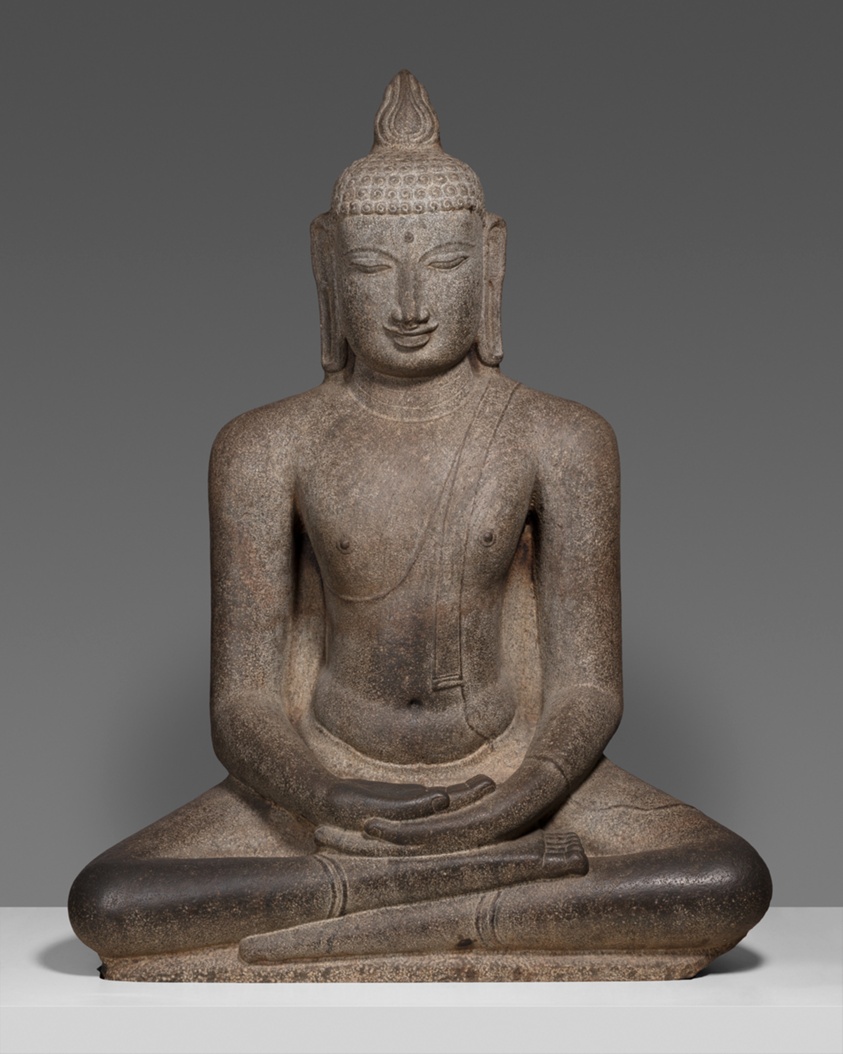
Dark stone sculpture of Buddha sitting cross-legged, hands in lap, eyes closed.
Buddha Shakyamuni seated in meditationIndia Nagapattinam, Tamil Nadu · Chola period, about 12th centuryThe Art Institute of Chicago · CC0
Image & source
Dark stone sculpture of Buddha sitting cross-legged, hands in lap, eyes closed.

Sculpture / Source record

Buddha Shakyamuni Seated in Meditation (Dhyanamudra)

Read the catalogue and evidence →
Maker
India Nagapattinam, Tamil Nadu
Date
Chola period, about 12th century
Medium
Granite
Collection
The Art Institute of Chicago
Accession
1964.556
Credit
Purchased with funds provided by Mr. and Mrs. Robert Andrew Brown
Rights
Public domain · CC0

Public domain · CC0. Unchanged copy of the institution’s verified web image; smaller responsive JPEGs are resized derivatives. Full-resolution image remains linked to the institution. Editorial views may show a detail.

Institution’s full-resolution image ↗Museum reuse policy ↗

Institutional rights designation checked 2026-10-17. Catalogue descriptions are normalized from source data; visual interpretation may be unassessed.

Original museum record ↗Read the CC0 dedication ↗

Notice the relation of the hands, knees and base. Then read the object record for the figure’s specific religious and cultural context.
03 / Return
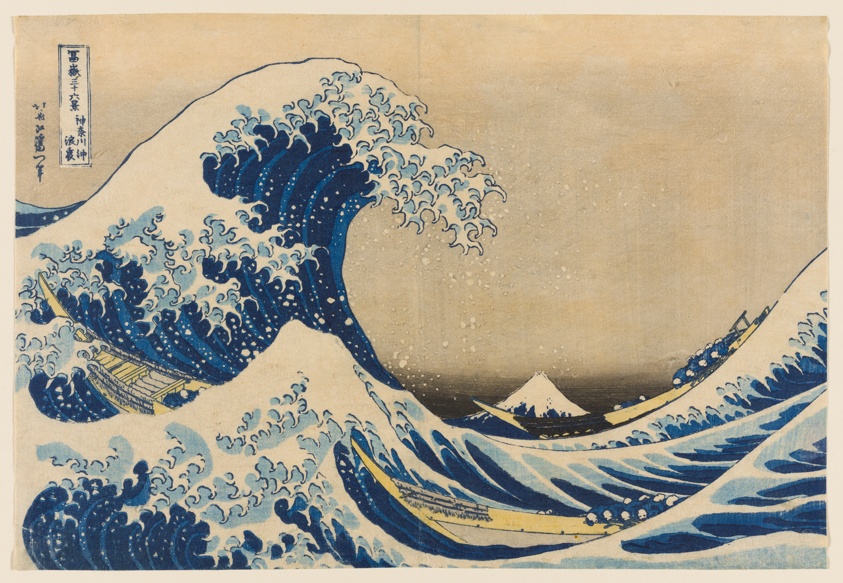
A color woodblock print of a large crashing wave, looms over two narrow boats full of people. Mt Fuji in the background. There is a faint peach colored sky.
Under the Wave off KanagawaKatsushika Hokusai 葛飾 北斎 Japanese, 1760-1849 · 1830/33The Art Institute of Chicago · CC0
Image & source
A color woodblock print of a large crashing wave, looms over two narrow boats full of people. Mt Fuji in the background. There is a faint peach colored sky.

Print / Source record

Under the Wave off Kanagawa (Kanagawa oki nami ura), also known as The Great Wave, from the series "Thirty-Six Views of Mount Fuji (Fugaku sanjurokkei)"

Read the catalogue and evidence →
Maker
Katsushika Hokusai 葛飾 北斎 Japanese, 1760-1849
Date
1830/33
Medium
Color woodblock print; oban
Collection
The Art Institute of Chicago
Accession
1928.1086
Credit
Clarence Buckingham Collection
Rights
Public domain · CC0

Public domain · CC0. Unchanged copy of the institution’s verified web image; smaller responsive JPEGs are resized derivatives. Full-resolution image remains linked to the institution. Editorial views may show a detail.

Institution’s full-resolution image ↗Museum reuse policy ↗

Institutional rights designation checked 2026-10-17. Catalogue descriptions are normalized from source data; visual interpretation may be unassessed.

Original museum record ↗Read the CC0 dedication ↗

Follow the arc of the wave back toward the boats. What keeps your eye moving inside a still image?

04 / Washington, D.C. / 100 selected works

National Gallery of Art

An Artologium question

What happens when a surface is carved, remounted, or cut for printing?

A marble child turns slightly to one side. An ancient stone cup sits inside a twelfth-century silver setting. A boxwood block holds the carved reliefs that precede a printed sheet. Start with what the material itself records.

A five-minute looking route
Look closer
A Little BoyDesiderio da Settignano · 1455/1460National Gallery of Art · CC0
Image & source
A Little Boy — Sculpture by Desiderio da Settignano. marble.

Sculpture / Source record

A Little Boy

Read the catalogue and evidence →
Maker
Desiderio da Settignano
Date
1455/1460
Medium
marble
Collection
National Gallery of Art
Accession
1937.1.113
Credit
Andrew W. Mellon Collection. Courtesy National Gallery of Art, Washington
Rights
Public domain · CC0

Public domain · CC0. Unchanged copy of the institution’s verified 1000px IIIF display image; smaller responsive JPEGs are resized derivatives. Visit the institution for other available resolutions. Editorial views may show a detail.

Institution’s full-resolution image ↗Museum reuse policy ↗

Institutional rights designation checked 2026-10-21. Catalogue descriptions are normalized from source data; visual interpretation may be unassessed.

Original museum record ↗Read the CC0 dedication ↗

Full supplied image / A looking prompt

Pleats held in marble.

Across the chest, shallow carved channels gather at the shoulder clasp and fan downward. The stone stays still while the uneven spacing of the folds suggests a body that has just shifted.
Original museum record ↗
02 / Separate
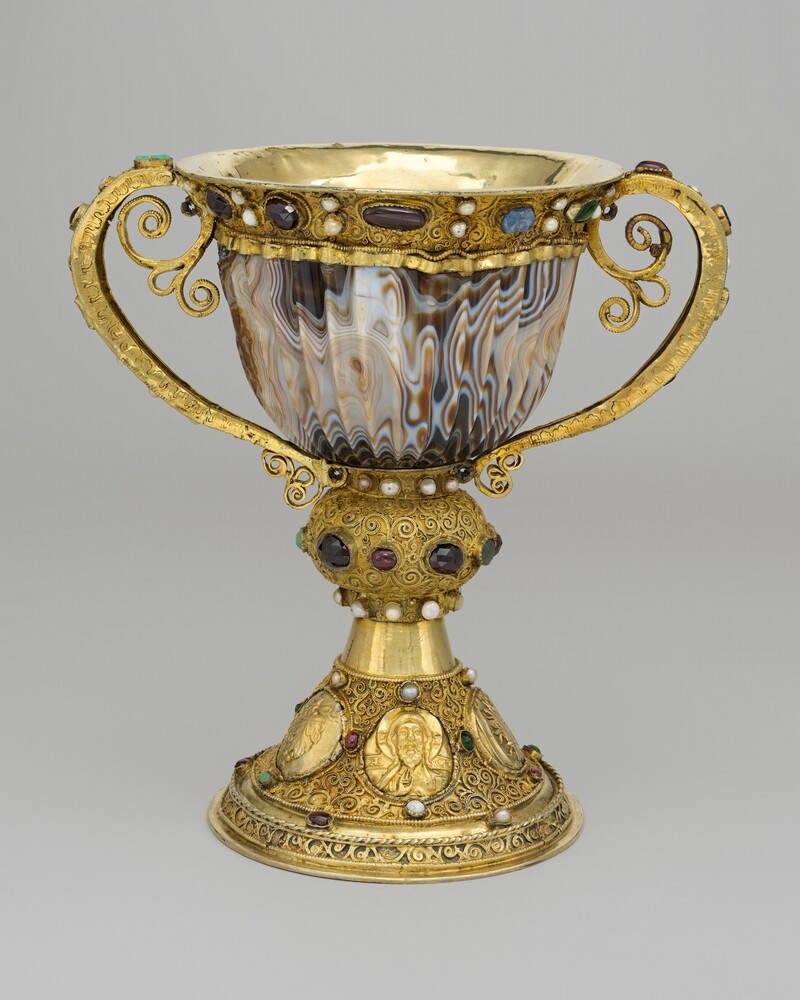
Chalice of the Abbot Suger of Saint-Denis — Decorative Art by French 12th Century (mounting); Alexandrian 2nd/1st Century B.C.(cup). sardonyx cup with heavily gilded silver mounting, adorned with filigrees set with stones, pearls, glass insets, and opaque white glass pearls.
Chalice of the Abbot Suger of Saint-DenisFrench 12th Century (mounting); Alexandrian 2nd/1st Century B.C.(cup) · 2nd/1st century B.C. (cup); 1137-1140 (mounting)National Gallery of Art · CC0
Image & source
Chalice of the Abbot Suger of Saint-Denis — Decorative Art by French 12th Century (mounting); Alexandrian 2nd/1st Century B.C.(cup). sardonyx cup with heavily gilded silver mounting, adorned with filigrees set with stones, pearls, glass insets, and opaque white glass pearls.

Decorative Art / Source record

Chalice of the Abbot Suger of Saint-Denis

Read the catalogue and evidence →
Maker
French 12th Century (mounting); Alexandrian 2nd/1st Century B.C.(cup)
Date
2nd/1st century B.C. (cup); 1137-1140 (mounting)
Medium
sardonyx cup with heavily gilded silver mounting, adorned with filigrees set with stones, pearls, glass insets, and opaque white glass pearls
Collection
National Gallery of Art
Accession
1942.9.277
Credit
Widener Collection. Courtesy National Gallery of Art, Washington
Rights
Public domain · CC0

Public domain · CC0. Unchanged copy of the institution’s verified 1000px IIIF display image; smaller responsive JPEGs are resized derivatives. Visit the institution for other available resolutions. Editorial views may show a detail.

Institution’s full-resolution image ↗Museum reuse policy ↗

Institutional rights designation checked 2026-10-21. Catalogue descriptions are normalized from source data; visual interpretation may be unassessed.

Original museum record ↗Read the CC0 dedication ↗

Separate the carved sardonyx cup from the gilded silver mounting around it. How do two eras share a single object?
03 / Reverse
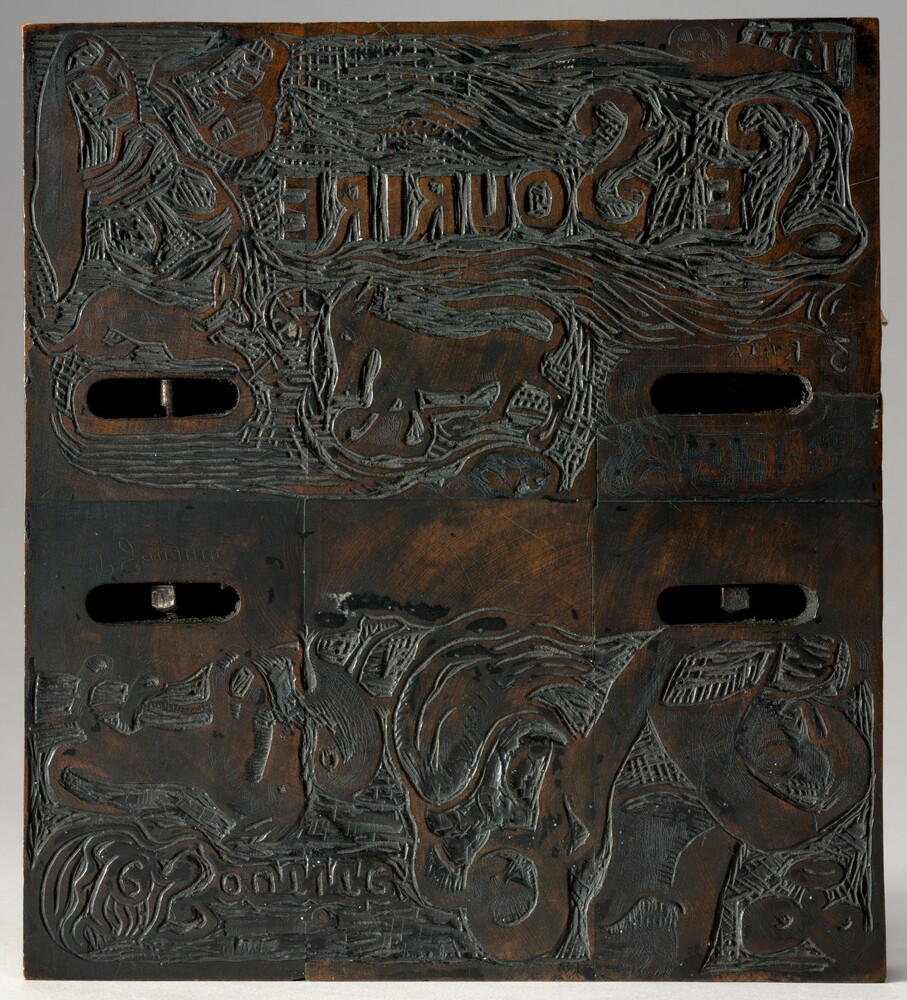
Two Title Pages for "Le Sourire" (Les deux titres du Sourire) [verso] — Technical Material by Paul Gauguin. boxwood woodcut block.
Two Title Pages for “Le Sourire” (woodcut block)Paul Gauguin · 1899National Gallery of Art · CC0
Image & source
Two Title Pages for "Le Sourire" (Les deux titres du Sourire) [verso] — Technical Material by Paul Gauguin. boxwood woodcut block.

Technical Material / Source record

Two Title Pages for "Le Sourire" (Les deux titres du Sourire) [verso]

Read the catalogue and evidence →
Maker
Paul Gauguin
Date
1899
Medium
boxwood woodcut block
Collection
National Gallery of Art
Accession
1943.3.1726.b
Credit
Rosenwald Collection. Courtesy National Gallery of Art, Washington
Rights
Public domain · CC0

Public domain · CC0. Unchanged copy of the institution’s verified 1000px IIIF display image; smaller responsive JPEGs are resized derivatives. Visit the institution for other available resolutions. Editorial views may show a detail.

Institution’s full-resolution image ↗Museum reuse policy ↗

Institutional rights designation checked 2026-10-21. Catalogue descriptions are normalized from source data; visual interpretation may be unassessed.

Original museum record ↗Read the CC0 dedication ↗

Read the reversed letters and carved ridges in the boxwood. What can you see on the block that an inked impression would change?

05 / Washington, D.C. / 100 selected works

National Museum of Asian Art

An Artologium question

What stays visible when an object is painted, rejoined, or cancelled?

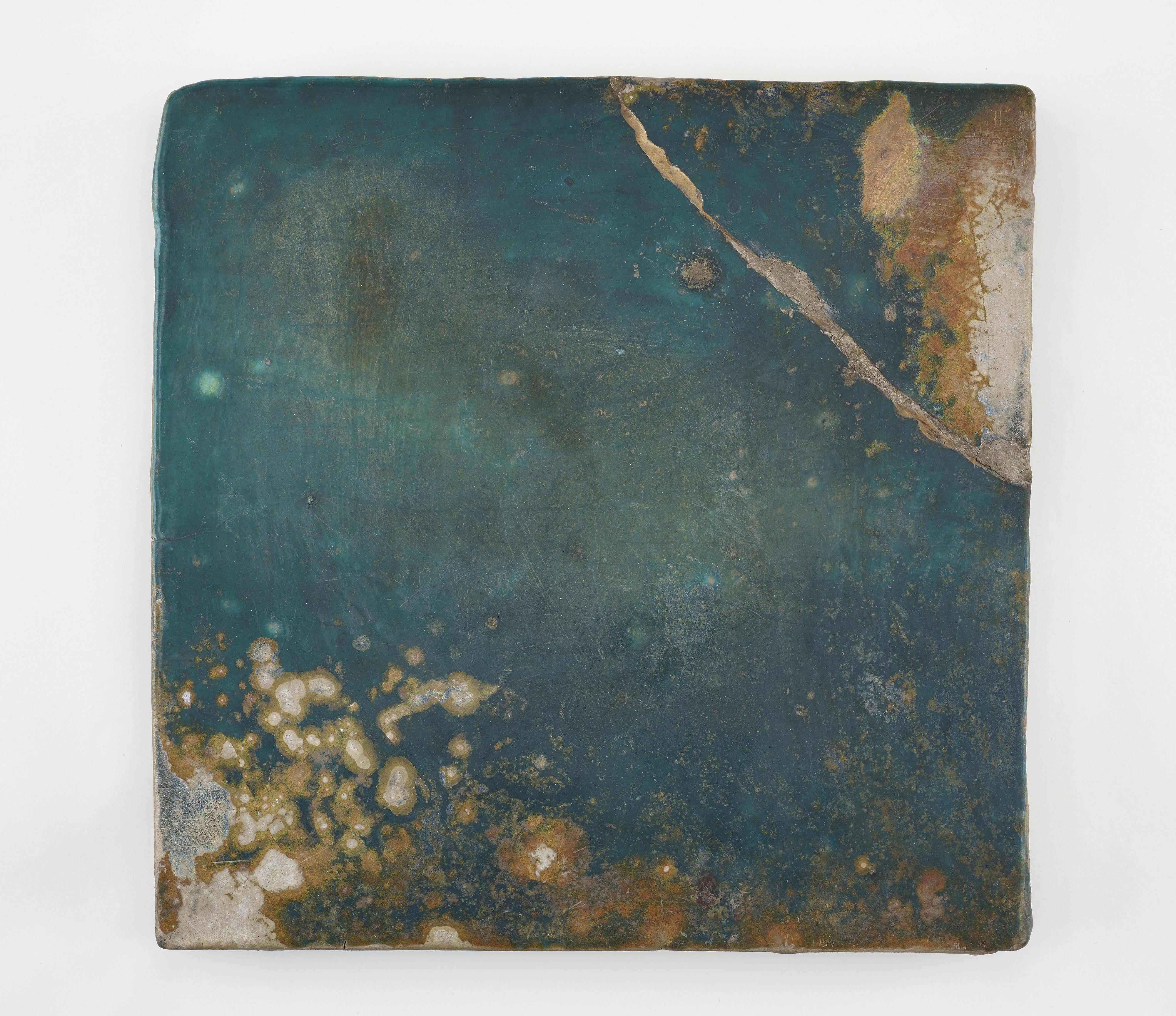
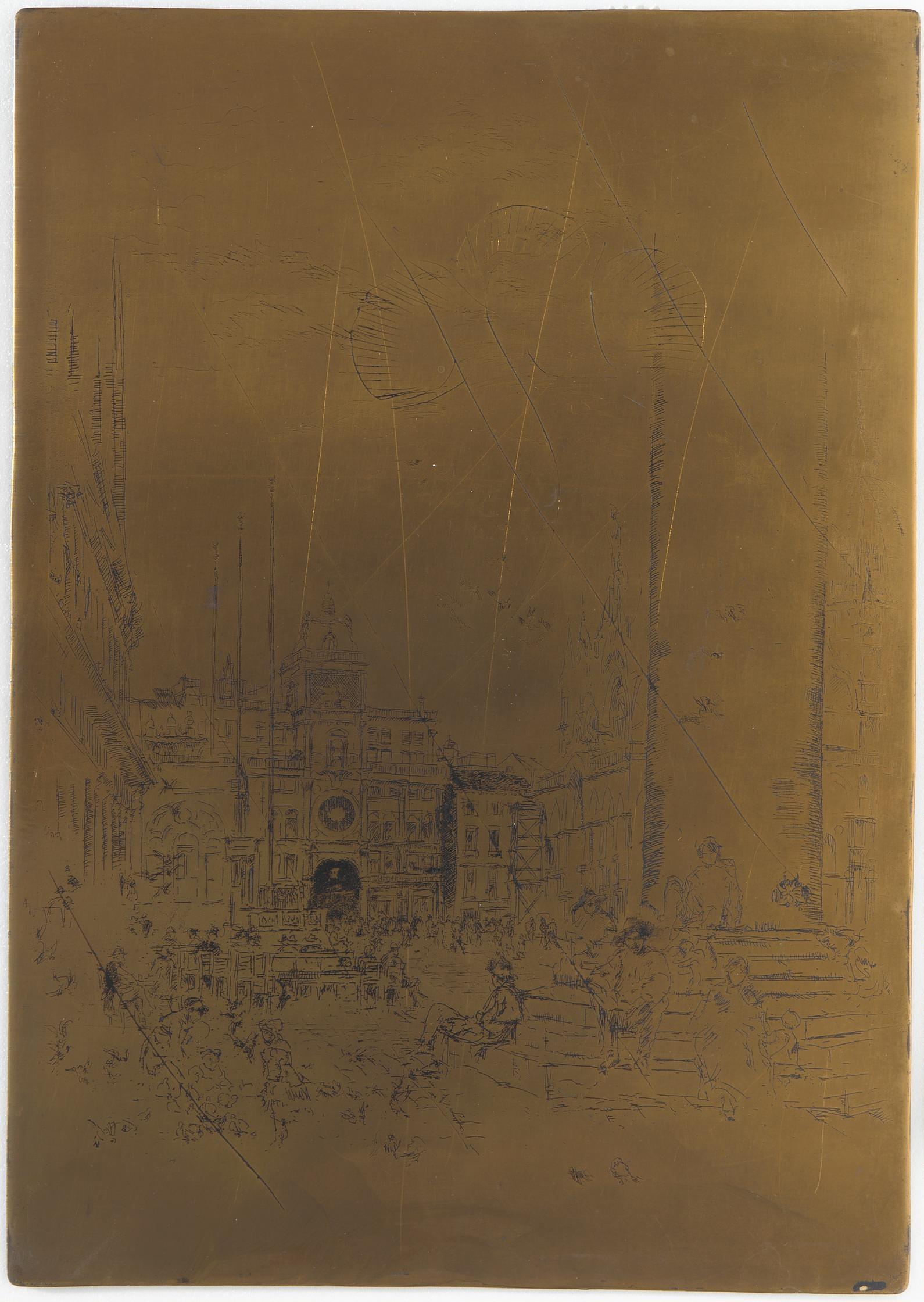
Two magpies call beneath an overhanging cliff on silk. A twelfth-century ceramic tile shows the line where its broken corner was rejoined. A copper plate bears the diagonal strokes that ended its printing edition. Look for the traces of making and use.

A five-minute looking route
Look closer
Two magpies under an orchid cliffPossibly by Lü Ji (ca. 1420-ca. 1505); Formerly attributed to Zhao Chang (ca. 960-after 1015) · 15th centuryNational Museum of Asian Art · CC0
Image & source
Hanging scroll (mounted on panel)

Painting / Source record

Two magpies under an orchid cliff

Read the catalogue and evidence →
Maker
Possibly by Lü Ji (ca. 1420-ca. 1505); Formerly attributed to Zhao Chang (ca. 960-after 1015)
Date
15th century
Medium
Hanging scroll mounted on panel; ink and color on silk
Collection
National Museum of Asian Art
Accession
F1911.309
Credit
Gift of Charles Lang Freer
Rights
Public domain · CC0

Public domain · CC0. Unchanged copy of the institution’s verified web image; smaller responsive JPEGs are resized derivatives. Full-resolution image remains linked to the institution. Editorial views may show a detail.

Institution’s full-resolution image ↗Museum reuse policy ↗

Institutional rights designation checked 2026-10-21. Catalogue descriptions are normalized from source data; visual interpretation may be unassessed.

Original museum record ↗Read the CC0 dedication ↗

Full supplied image / A looking prompt

Two birds against a diagonal rock.

Where the dark rock overhang meets the open silk, two magpies turn toward one another while thin orchid leaves arc into the empty space below.
Original museum record ↗
02 / Inspect
Tile
Tile, large square. Broken corner rejoinedMaker unrecorded · late 12th-early 13th centuryNational Museum of Asian Art · CC0
Image & source
Tile

Architectural Element / Source record

Tile, large square. Broken corner rejoined

Read the catalogue and evidence →
Maker
Maker unrecorded
Date
late 12th-early 13th century
Medium
Stone-paste painted underglaze
Collection
National Museum of Asian Art
Accession
F1908.119
Credit
Gift of Charles Lang Freer
Rights
Public domain · CC0

Public domain · CC0. Unchanged copy of the institution’s verified web image; smaller responsive JPEGs are resized derivatives. Full-resolution image remains linked to the institution. Editorial views may show a detail.

Institution’s full-resolution image ↗Museum reuse policy ↗

Institutional rights designation checked 2026-10-21. Catalogue descriptions are normalized from source data; visual interpretation may be unassessed.

Original museum record ↗Read the CC0 dedication ↗

Find the diagonal seam mentioned in the catalogue title. How does the museum’s factual description guide what you notice in the glaze?
03 / Look through
Printing plate/block
Cancelled Printing Plate for The PiazzettaJames McNeill Whistler (1834-1903) · 1879-1880National Museum of Asian Art · CC0
Image & source
Printing plate/block

Tool and Equipment / Source record

Cancelled Printing Plate for The Piazzetta

Read the catalogue and evidence →
Maker
James McNeill Whistler (1834-1903)
Date
1879-1880
Medium
Copper
Collection
National Museum of Asian Art
Accession
F1902.132
Credit
Gift of Charles Lang Freer
Rights
Public domain · CC0

Public domain · CC0. Unchanged copy of the institution’s verified web image; smaller responsive JPEGs are resized derivatives. Full-resolution image remains linked to the institution. Editorial views may show a detail.

Institution’s full-resolution image ↗Museum reuse policy ↗

Institutional rights designation checked 2026-10-21. Catalogue descriptions are normalized from source data; visual interpretation may be unassessed.

Original museum record ↗Read the CC0 dedication ↗

Look through the crossing cancellation lines to the architectural scene beneath. Why keep a plate after it can no longer print an uncrossed image?

06 / New York / 100 selected works

Cooper Hewitt, Smithsonian Design Museum

An Artologium question

How does a drawing prepare an object—or a plate transfer a pattern?

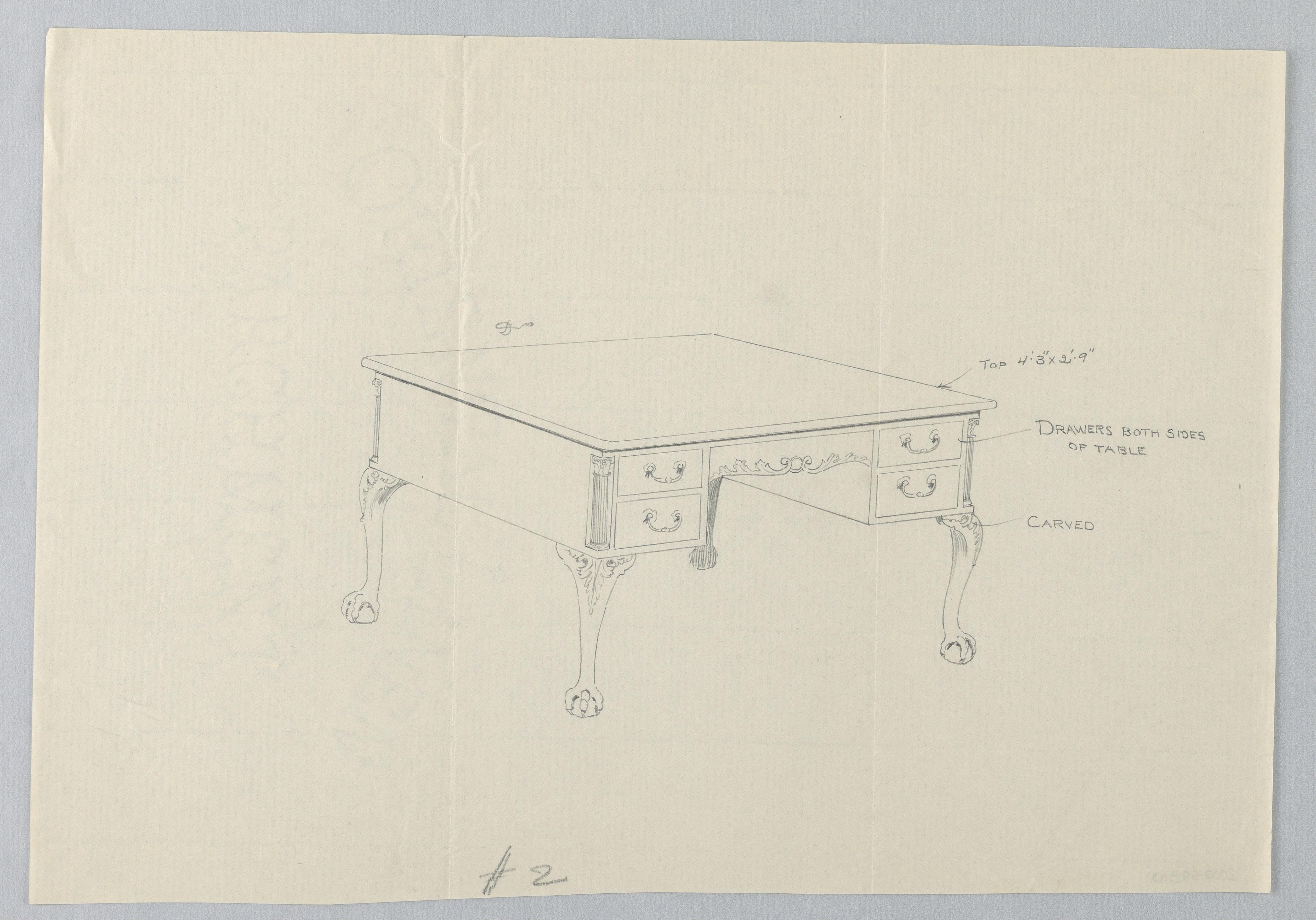
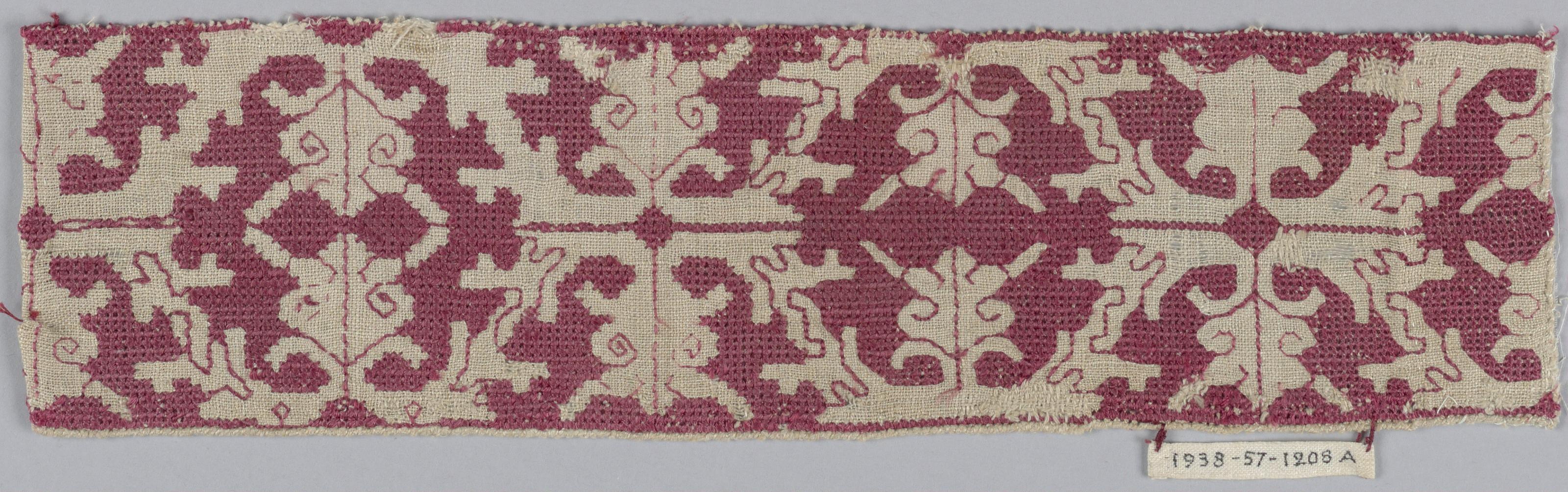
An engraved copper plate presses a narrative scene onto plain-weave cotton. A graphite sheet works out the proportions and lion-paw feet of a writing table. Embroidered silk threads build a repeating border on linen. Here, design is visible in the decisions before and during making.

A five-minute looking route
Look closer
Dites Merci (copper-plate printed cotton)Meillier et Cie · ca. 1798Cooper Hewitt, Smithsonian Design Museum · CC0
Image & source
DITES MERCI

Textile / Source record

Dites Merci

Read the catalogue and evidence →
Maker
Meillier et Cie
Date
ca. 1798
Medium
Medium: cotton Technique: printed by engraved copper plate on plain weave
Collection
Cooper Hewitt, Smithsonian Design Museum
Accession
1943-43-12-a/d
Credit
Gift of W. and J. Sloane
Rights
Public domain · CC0

Public domain · CC0. Unchanged copy of the institution’s verified web image; smaller responsive JPEGs are resized derivatives. Full-resolution image remains linked to the institution. Editorial views may show a detail.

Institution’s full-resolution image ↗Museum reuse policy ↗

Institutional rights designation checked 2026-10-21. Catalogue descriptions are normalized from source data; visual interpretation may be unassessed.

Original museum record ↗Read the CC0 dedication ↗

Full supplied image / A looking prompt

Fine engraved lines on woven cotton.

Dense parallel hatching—typical of copper-plate engraving on paper—meets the warp and weft of plain-weave cotton, holding both architectural framing and small narrative gestures.
Original museum record ↗
02 / Measure
DESIGN FOR WRITING TABLE NO. 2 AND LION-PAW FEET
Design for Writing Table No. 2 and Lion-Paw FeetA.N. Davenport Co. · 1900–05Cooper Hewitt, Smithsonian Design Museum · CC0
Image & source
DESIGN FOR WRITING TABLE NO. 2 AND LION-PAW FEET

Drawing / Source record

Design for Writing Table No. 2 and Lion-Paw Feet

Read the catalogue and evidence →
Maker
A.N. Davenport Co.
Date
1900–05
Medium
Graphite on thin cream paper
Collection
Cooper Hewitt, Smithsonian Design Museum
Accession
2000-69-310
Credit
Gift of The Lake St. Louis Historical Society
Rights
Public domain · CC0

Public domain · CC0. Unchanged copy of the institution’s verified web image; smaller responsive JPEGs are resized derivatives. Full-resolution image remains linked to the institution. Editorial views may show a detail.

Institution’s full-resolution image ↗Museum reuse policy ↗

Institutional rights designation checked 2026-10-21. Catalogue descriptions are normalized from source data; visual interpretation may be unassessed.

Original museum record ↗Read the CC0 dedication ↗

Compare the full table elevation with the enlarged detail of the foot beside it. What does a working drawing need to show a maker?
03 / Follow
Band — Band. Medium: silk, linen Technique: embroidered.
Embroidered bandMaker unrecorded · 17th centuryCooper Hewitt, Smithsonian Design Museum · CC0
Image & source
Band — Band. Medium: silk, linen Technique: embroidered.

Band / Source record

Band

Read the catalogue and evidence →
Maker
Maker unrecorded
Date
17th century
Medium
Medium: silk, linen Technique: embroidered
Collection
Cooper Hewitt, Smithsonian Design Museum
Accession
1938-57-1208-a
Credit
Bequest of Erskine Hewitt
Rights
Public domain · CC0

Public domain · CC0. Unchanged copy of the institution’s verified web image; smaller responsive JPEGs are resized derivatives. Full-resolution image remains linked to the institution. Editorial views may show a detail.

Institution’s full-resolution image ↗Museum reuse policy ↗

Institutional rights designation checked 2026-10-21. Catalogue descriptions are normalized from source data; visual interpretation may be unassessed.

Original museum record ↗Read the CC0 dedication ↗

Follow the repeating floral scroll from left to right. How does the grid of the linen ground steady the curved silk stitching?

Custody & recorded context

Where the object rests vs. what its record names.

Six holding collections across four United States cities preserve works whose catalogue records name origins across East Asia, Europe, West and South Asia, and the Americas. Artologium keeps custody (the holding museum) distinct from recorded context (the place or culture field in that museum’s object record).