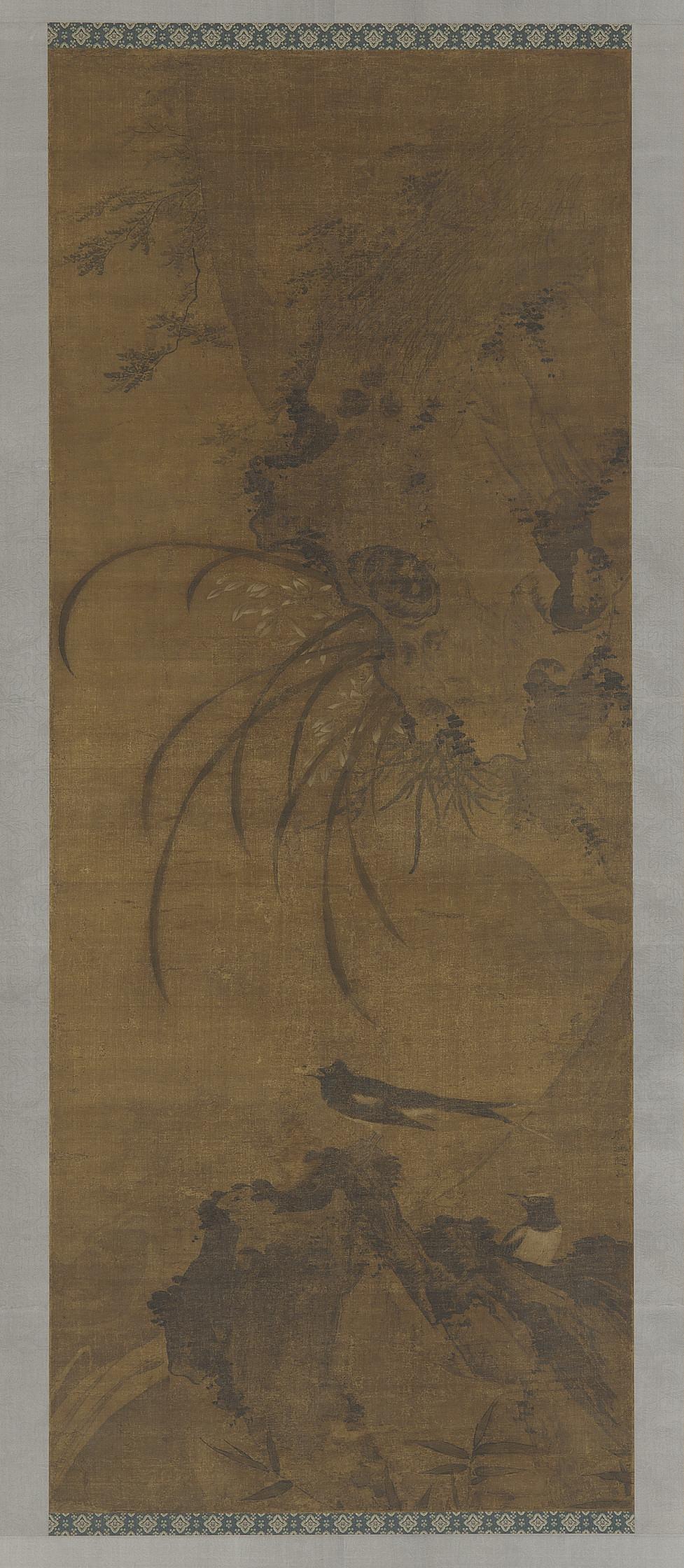
mid 18th - early 19th century · Cooper Hewitt, Smithsonian Design MuseumInstitution record ↗
Choose a question. Stay with a detail. See where it takes you.
01 / Guided looking
Let a detail lead.
Look across works through line, rhythm, fold, plant form, colour and material memory. These are authored visual exercises across six museum collections; resemblance alone does not establish historical contact.
Photography
Drawing
Path 01 / 6 works
Follow a line
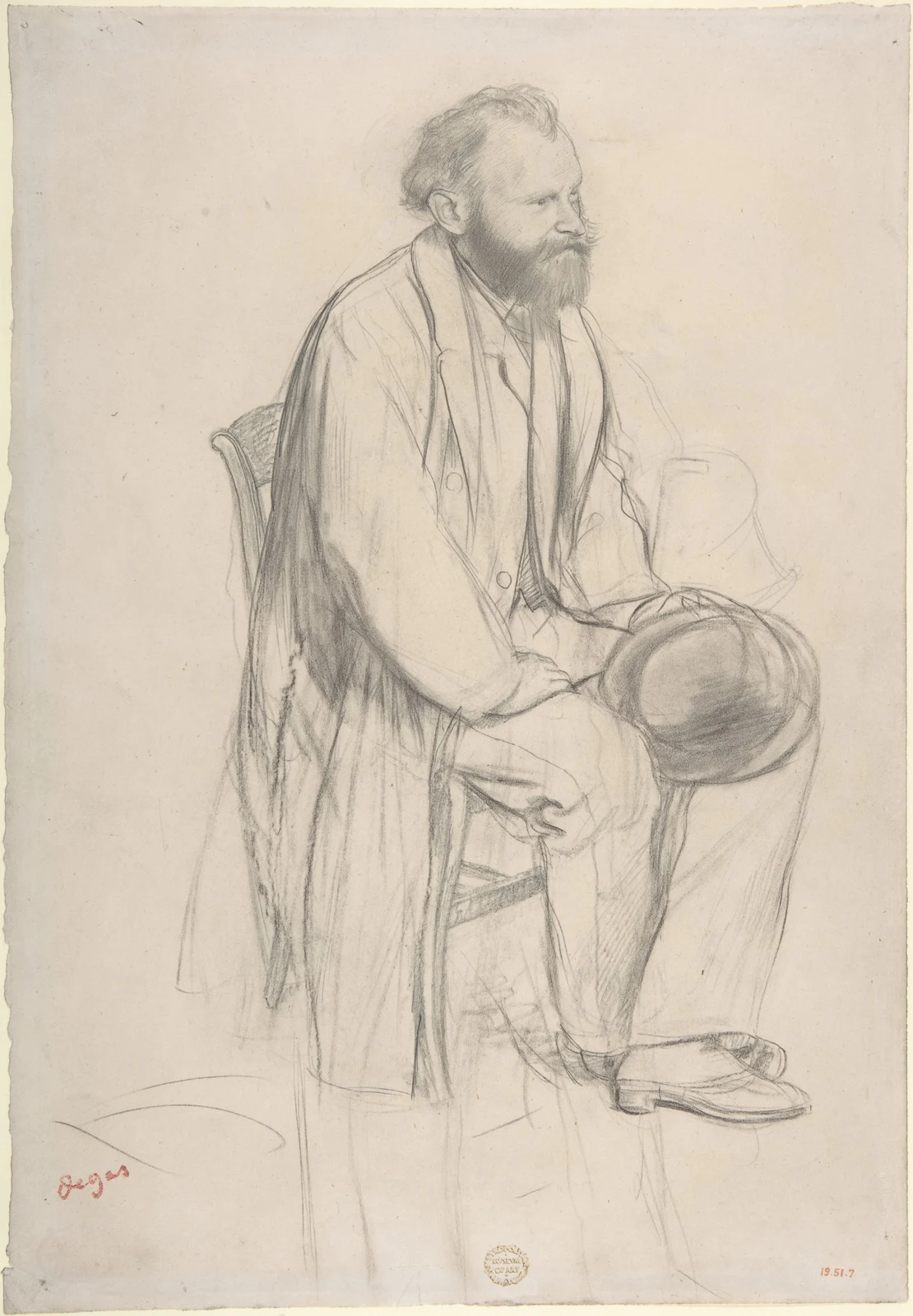
A line can be carved into a woodblock, incised into copper, drawn in black chalk, or ruled in graphite for a cabinetmaker. These six works across four museums ask your eye to move along a mark before asking what it represents.
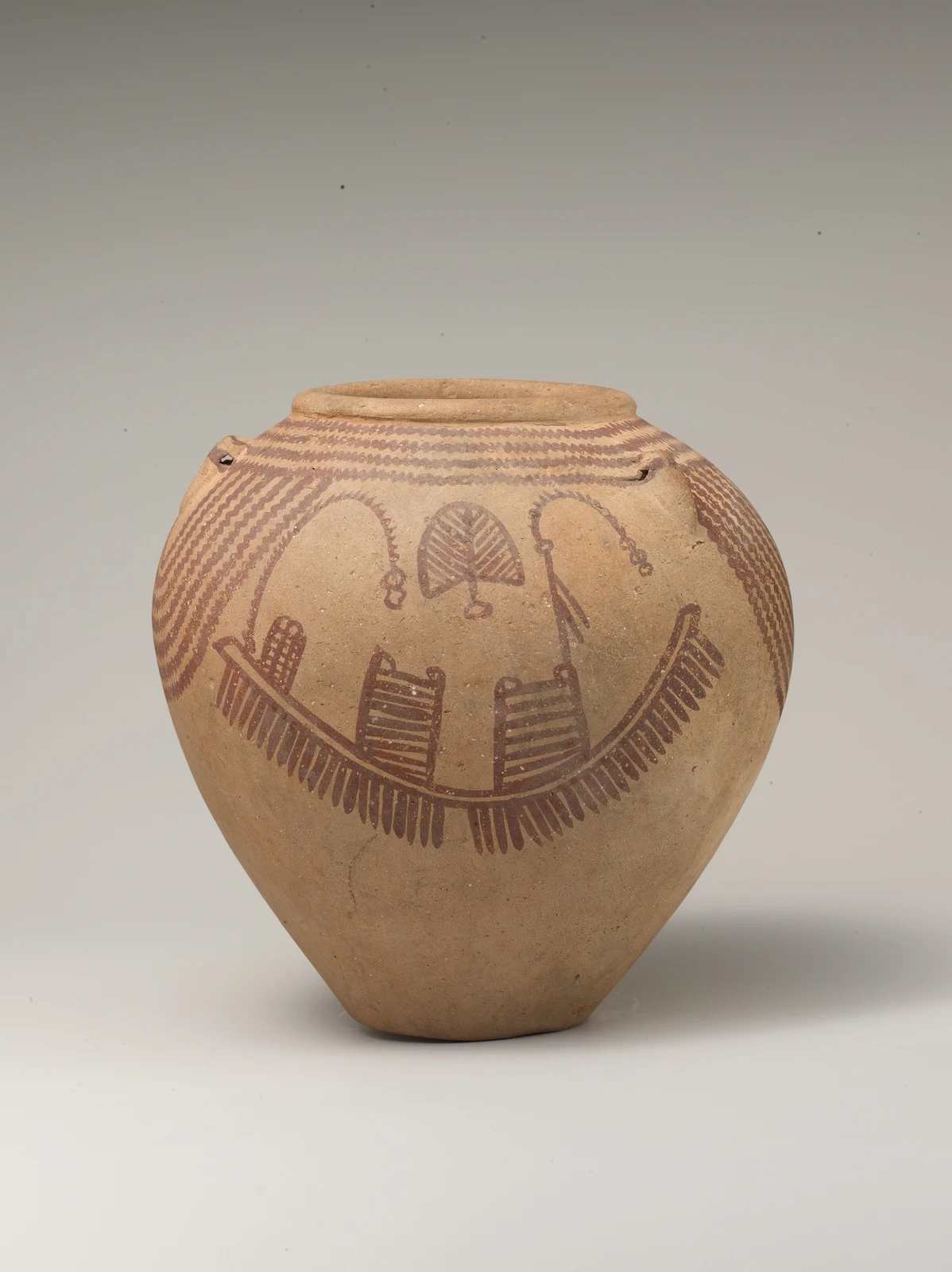
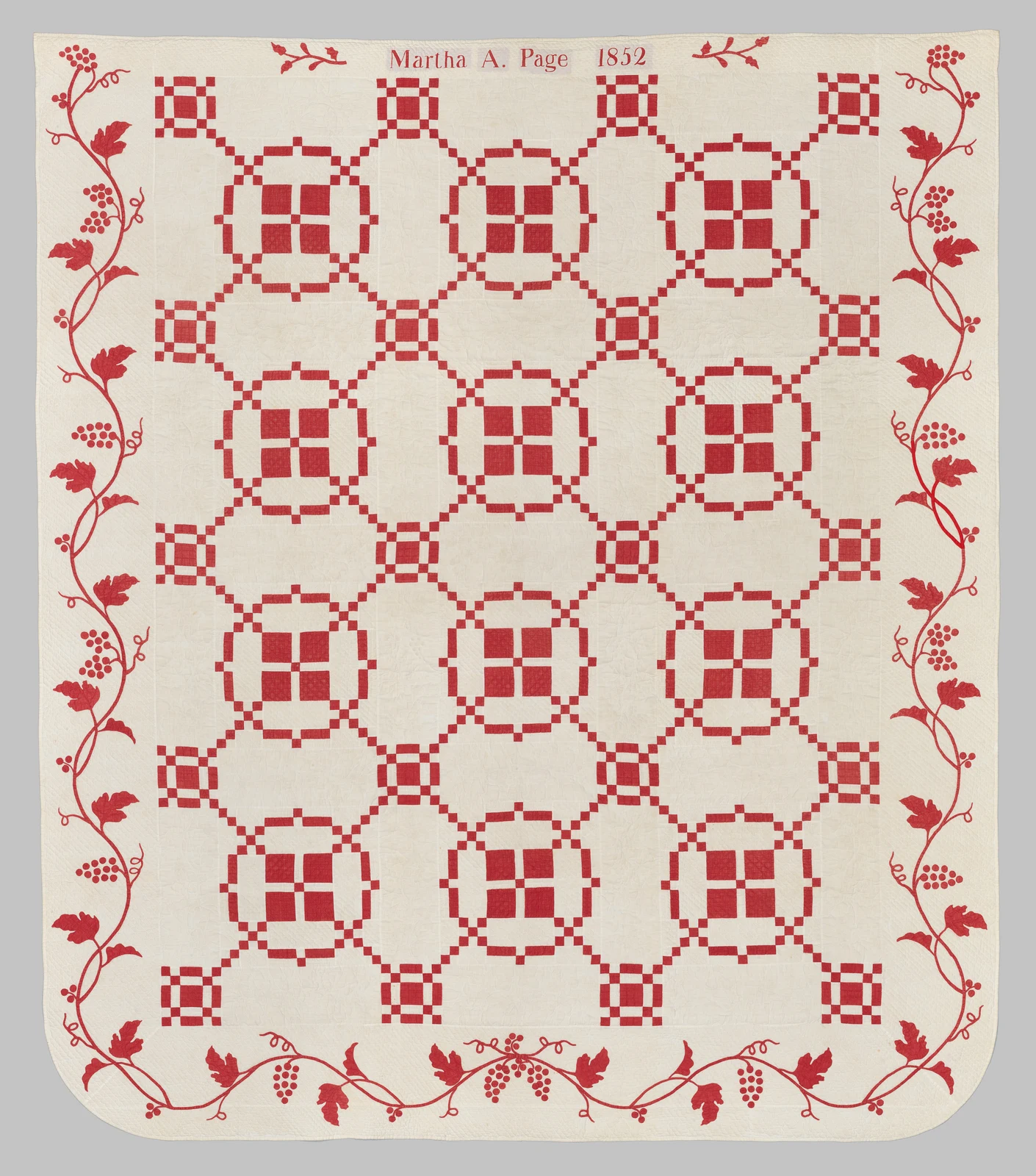
Repetition can circle a ceramic vessel, structure a patchwork quilt, break motion into frames, or continue across the mended crack of a lustre tile. Compare how six objects across four collections use recurrence.
These five works across four museums share a visual colour family while differing in material, process, and date. Visual blue stays distinct from a claim that the same pigment was used.
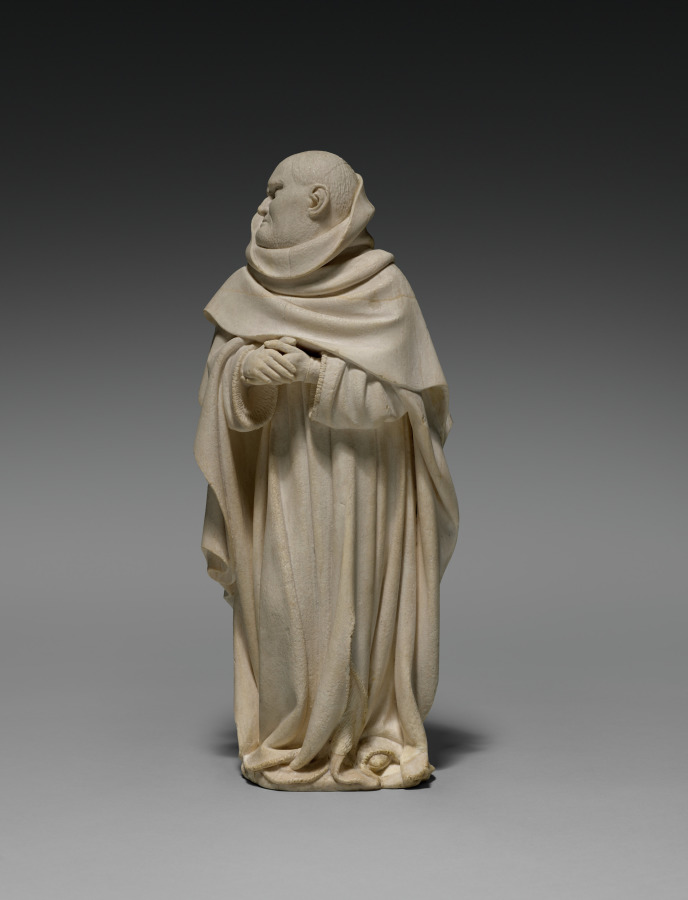
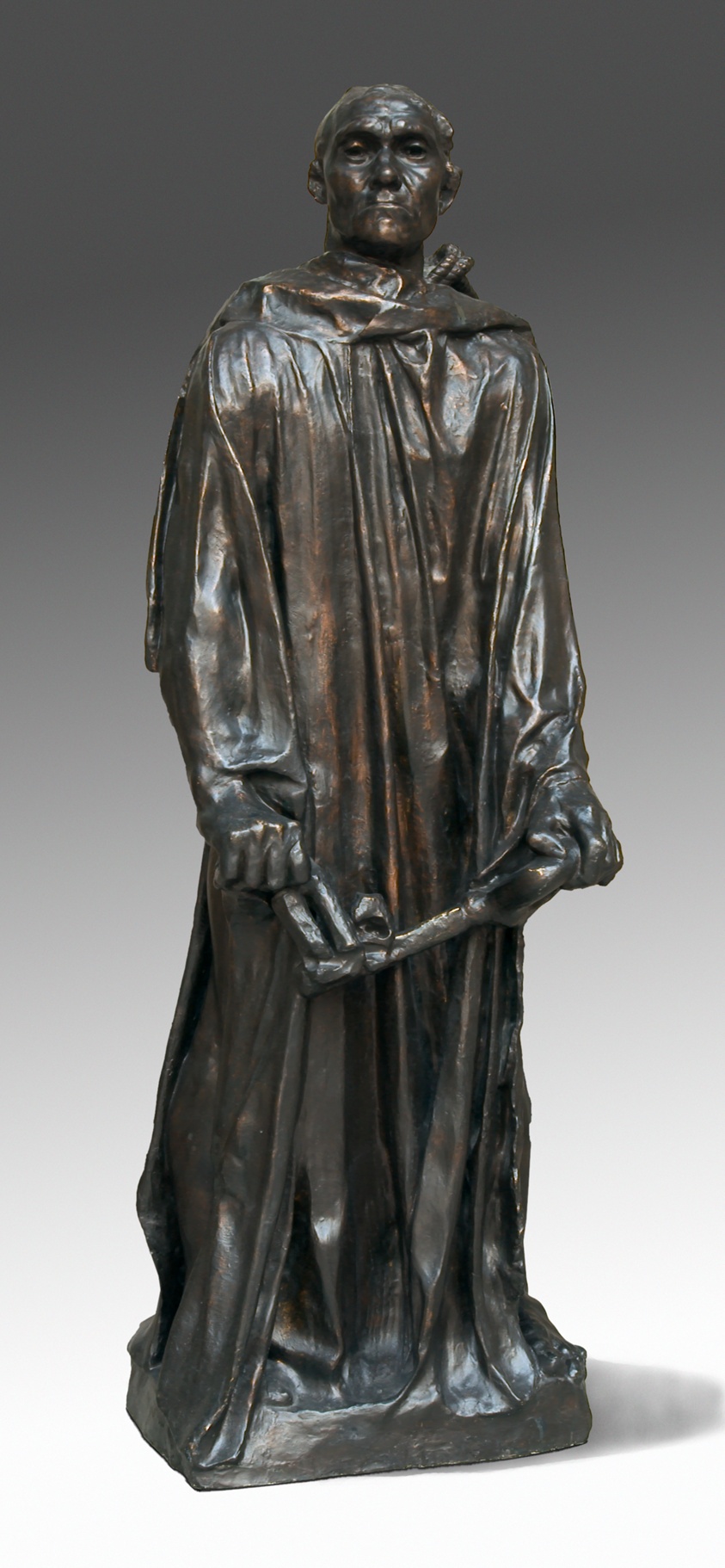
Drapery is where gravity becomes visible. Across alabaster, plaster, engraved copper, and red chalk, follow how five works in five museums use folds to conceal, anchor, or animate a body.
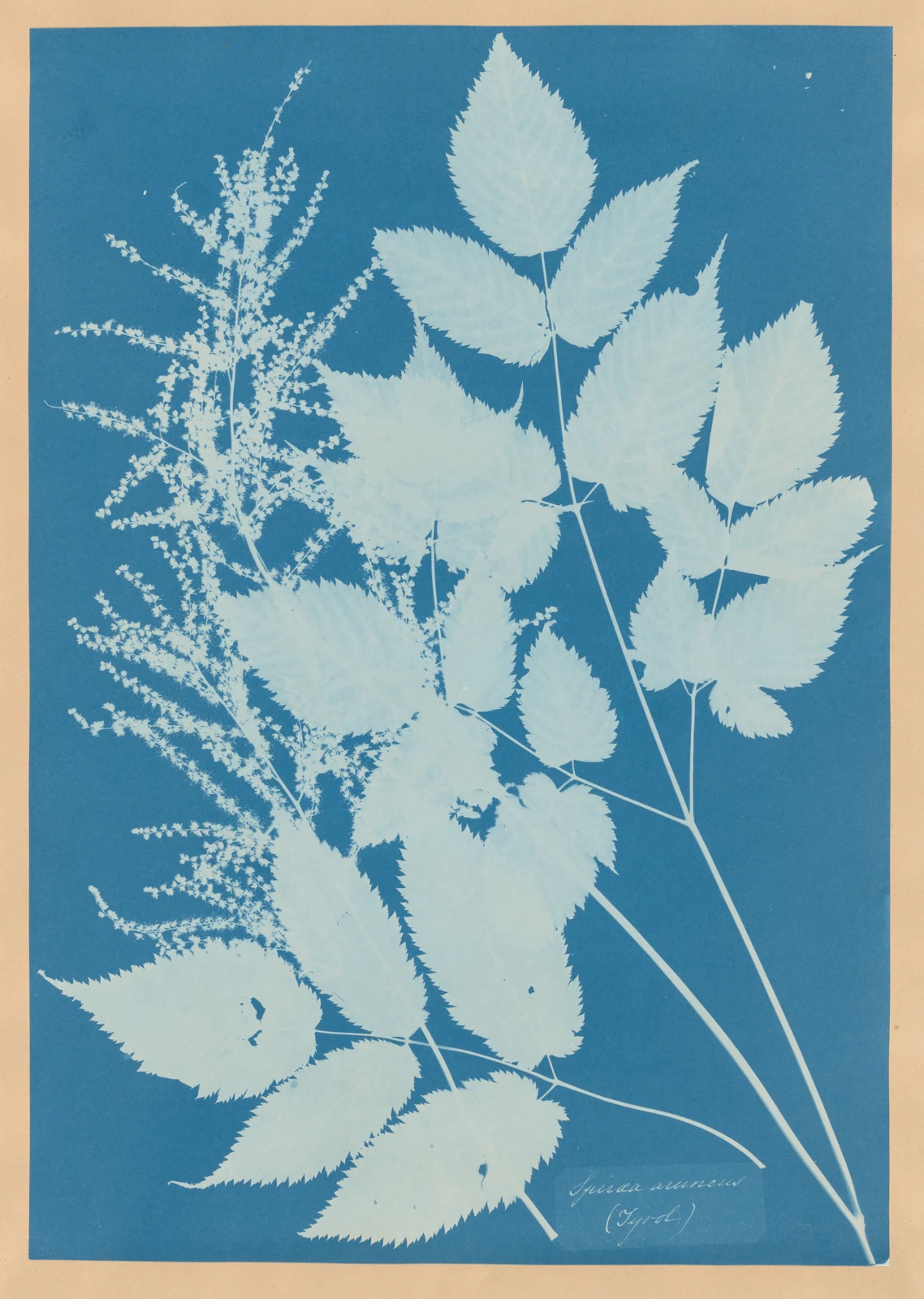
A stem or blossom asks for a different kind of attention in every medium. Move across five collections to compare how artists record, stylize, or abstract living plant forms.
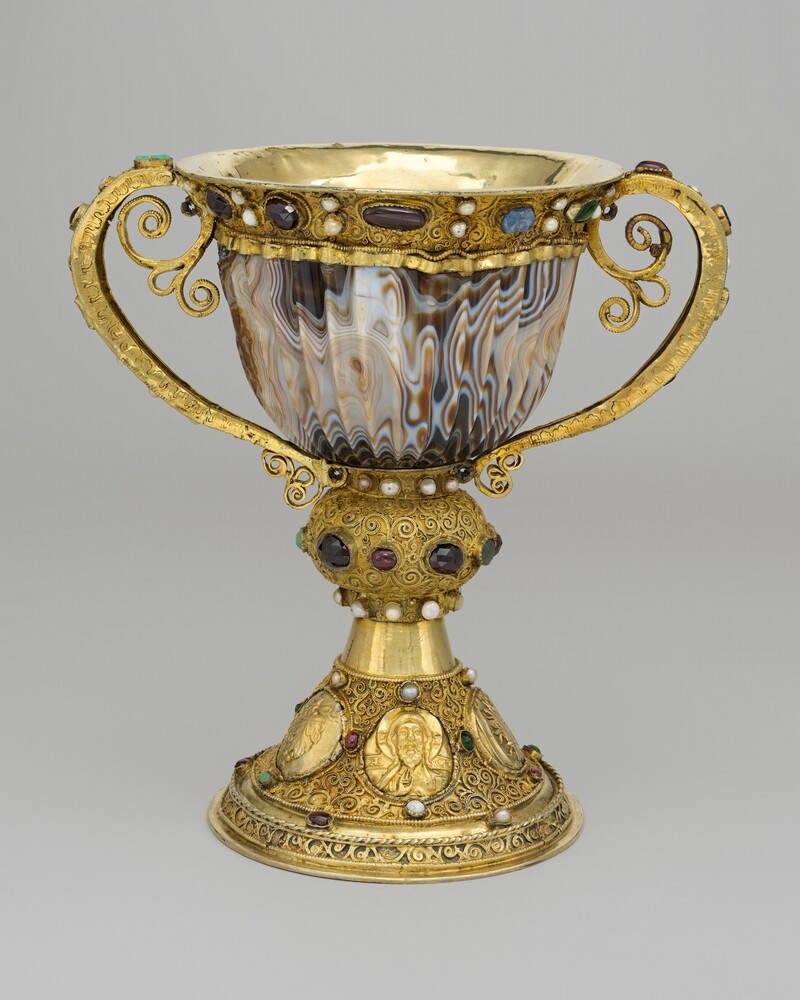
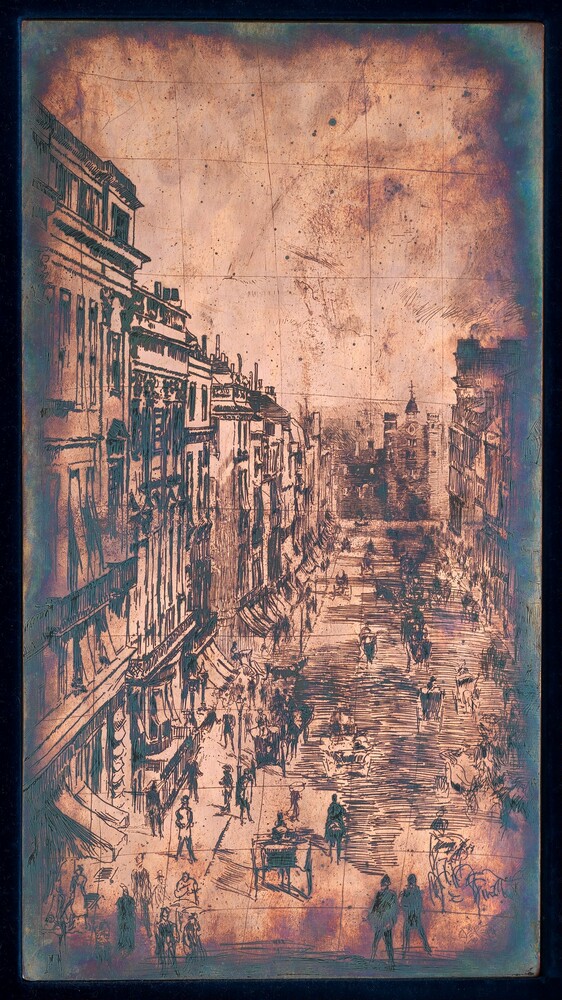
Some museum objects refuse to belong to a single moment. A Roman sardonyx cup is set into twelfth-century silver-gilt; a copper plate is scored to end its edition; a broken tile is rejoined; a woodblock is carved on its reverse. Follow five objects whose surfaces record a second life.
Decorated ware jar depicting boats ↗ Maker unrecorded · The Metropolitan Museum of Art CC0. Red-brown boats and repeated marks travel around a pale rounded vessel.
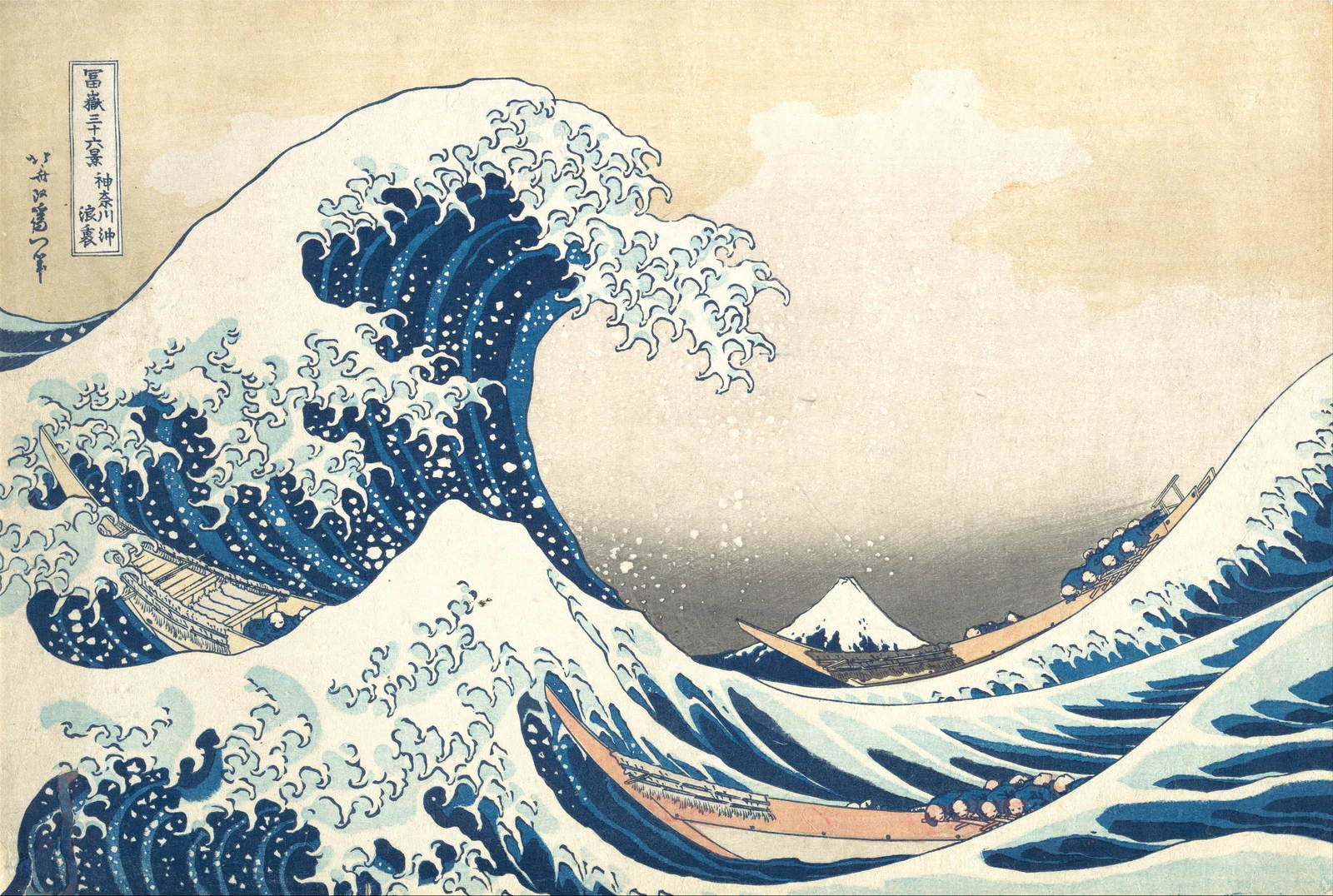
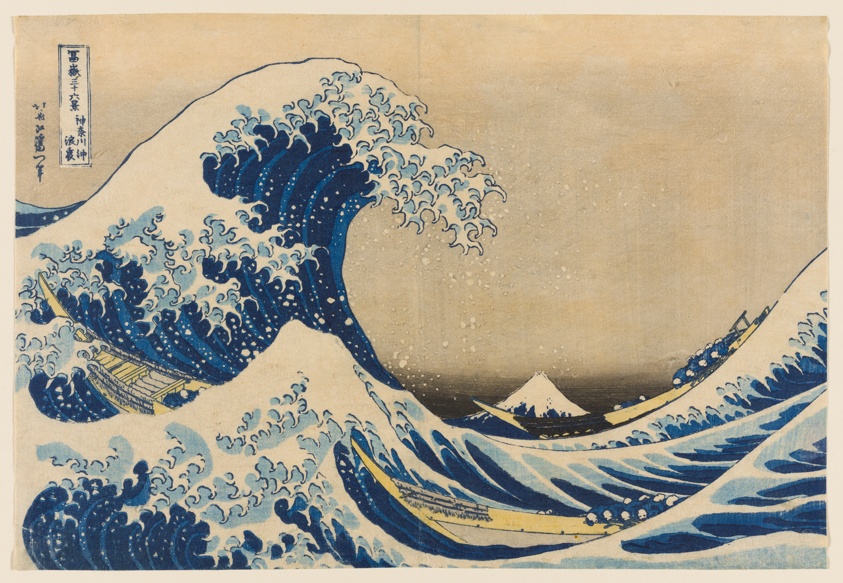
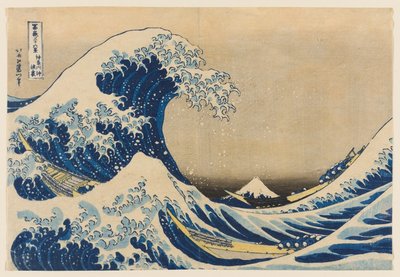
Under the Wave off Kanagawa (Kanagawa oki nami ura), also known as The Great Wave, from the series "Thirty-Six Views of Mount Fuji (Fugaku sanjurokkei)"
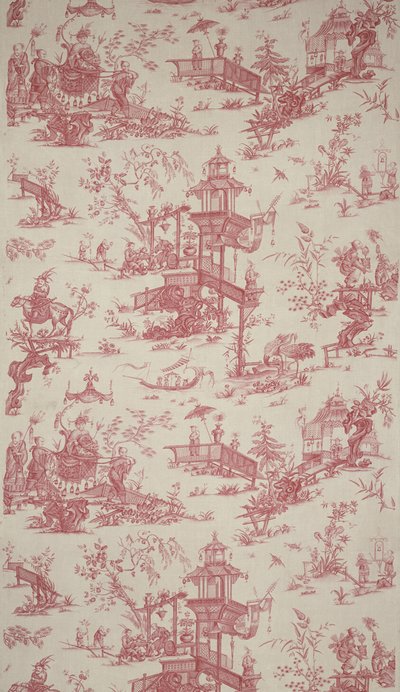
Panel (Furnishing Fabric) ↗ Designed by Jean Baptiste Huet (French, 1745–1811) after Jean Baptiste Pillement (French, 1728-1808) Jouy-en-Josas or Nantes, France · The Art Institute of Chicago CC0. French toile fabric with oriental scenes in red on a white ground. Pattern repeats and includes scenes of life.
c. 1786
Panel (Furnishing Fabric)
Maker
Designed by Jean Baptiste Huet (French, 1745–1811) after Jean Baptiste Pillement (French, 1728-1808) Jouy-en-Josas or Nantes, France
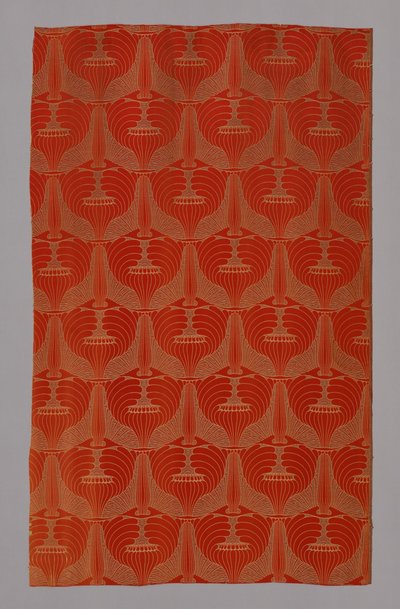
Mohnköpfe (Poppyheads) (Dress or Furnishing Fabric) ↗ Designed by Koloman Moser (Austrian, 1868–1918) Produced by Johan Backhausen und Söhne (Austrian, founded 1849) Austria, Vienna · The Art Institute of Chicago CC0. Large panel of red fabric covered in repeating white floral pattern.
Object types, materials and processes are normalized from the museum record. Original wording and source links stay attached.
Visual observation
A colour, a repeated mark, a pose. These describe a selected view. A blue image does not identify a pigment; an unlisted feature may be unassessed.
Artologium reading
Remember, Resist, Belong and Invent are authored lenses. Each membership has a rationale and a boundary. They are invitations to interpretation.
This review edition uses 228 defined concepts and 4859 accepted assignments across 1,553 works. Imported catalogue tags use automated source-field normalization; the opening eight also carry editorial observations and readings. The vocabulary is local; external authority mappings have not yet been added. Observations and readings were developed with AI assistance and checked against the source records and displayed images.
Classification version 2026-10-25-atlas-roundels. An artwork page provides the definition, evidence, and a downloadable record for each assignment.