Artologium

Art, in relation.

To leave a trace.

What survives us—and what keeps changing? Eight encounters with marks, materials and memory.

A mark can be an image, a pattern, a record, a tool. It can remain after the hand that made it has gone, while its setting and meaning keep changing.

This exhibition puts eight works in relation. The pairings are invitations to look across materials and purposes. They are not claims of a single lineage or an exhaustive history of art.

01
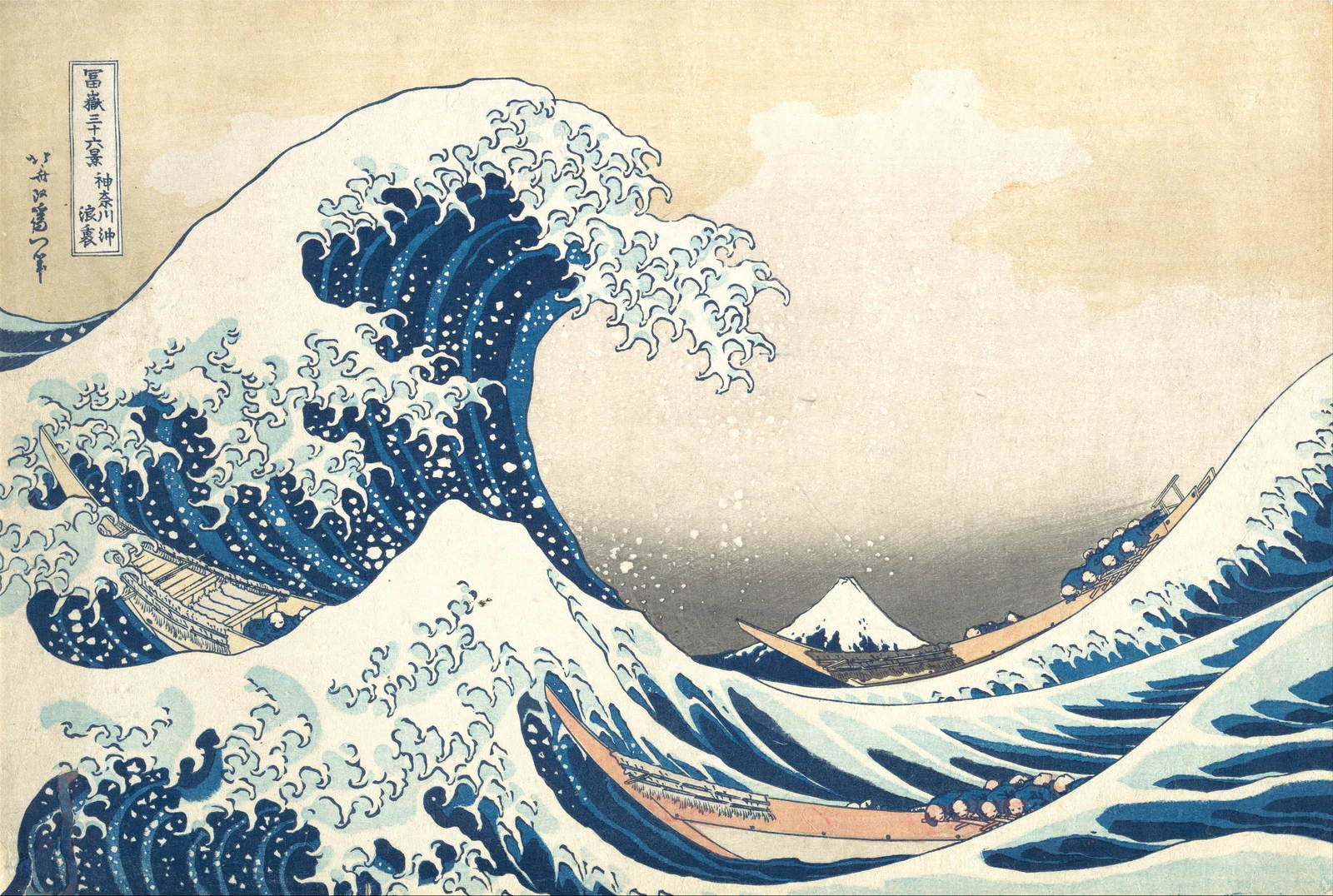
A wave curls over three long boats; Mount Fuji sits small beneath its arc.
Under the Wave off KanagawaKatsushika Hokusai · ca. 1830–32The Metropolitan Museum of Art · CC0
Image & source
A wave curls over three long boats; Mount Fuji sits small beneath its arc.

Print / Source record

Under the Wave off Kanagawa

Read the catalogue and evidence →
Maker
Katsushika Hokusai
Date
ca. 1830–32
Medium
Woodblock print; ink and color on paper
Collection
The Metropolitan Museum of Art
Accession
JP1847
Credit
H. O. Havemeyer Collection, Bequest of Mrs. H. O. Havemeyer, 1929
Rights
Public domain · CC0

Public domain · CC0. Resized and converted to WebP; no recoloring. Homepage details may be cropped; work record presents the full image. Editorial views may show a detail.

Institution’s full-resolution image ↗Museum reuse policy ↗Original museum record ↗Read the CC0 dedication ↗

Print / Japan

Can a line hold a moment?

Follow the repeated hooks of foam. The wave is made legible through a rhythm of smaller marks, while the distant mountain offers a quieter, more stable triangle.

Look closer →
02
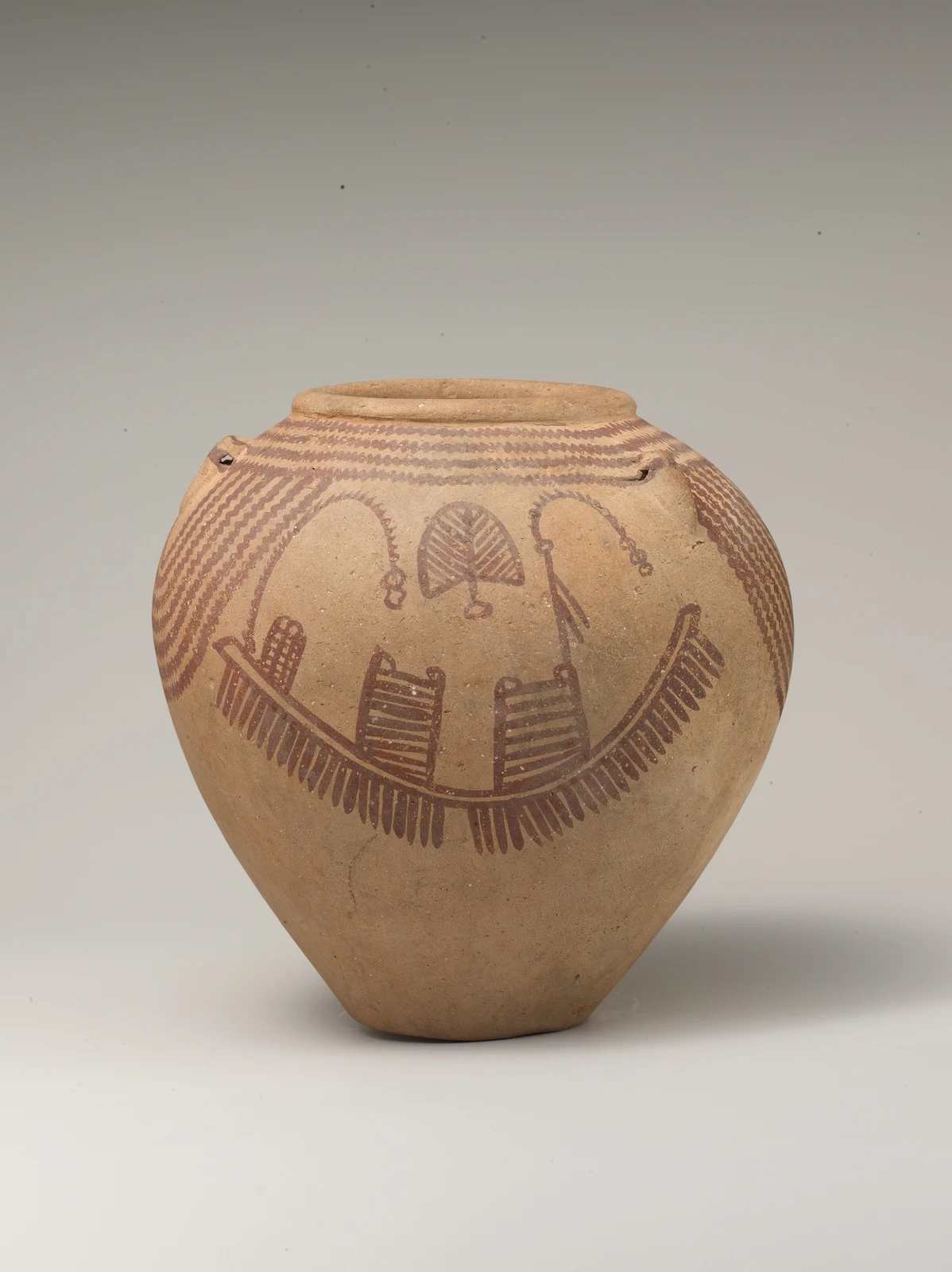
Red-brown boats and repeated marks travel around a pale rounded vessel.
A vessel carrying boatsMaker unrecorded · ca. 3500–3300 BCEThe Metropolitan Museum of Art · CC0
Image & source
Red-brown boats and repeated marks travel around a pale rounded vessel.

Clay / Source record

A vessel carrying boats

Read the catalogue and evidence →
Maker
Maker unrecorded
Date
ca. 3500–3300 BCE
Medium
Pottery, paint
Collection
The Metropolitan Museum of Art
Accession
36.1.121
Credit
Rogers Fund, 1936
Rights
Public domain · CC0

Public domain · CC0. Resized and converted to WebP; no recoloring. Homepage details may be cropped; work record presents the full image. Editorial views may show a detail.

Institution’s full-resolution image ↗Museum reuse policy ↗Original museum record ↗Read the CC0 dedication ↗

Clay / Egypt

What happens when an image has no edge?

The boats belong to a curved surface. A single photograph offers one view, while the vessel asks a viewer to imagine turning it and finding the image continuing.

Look closer →
03
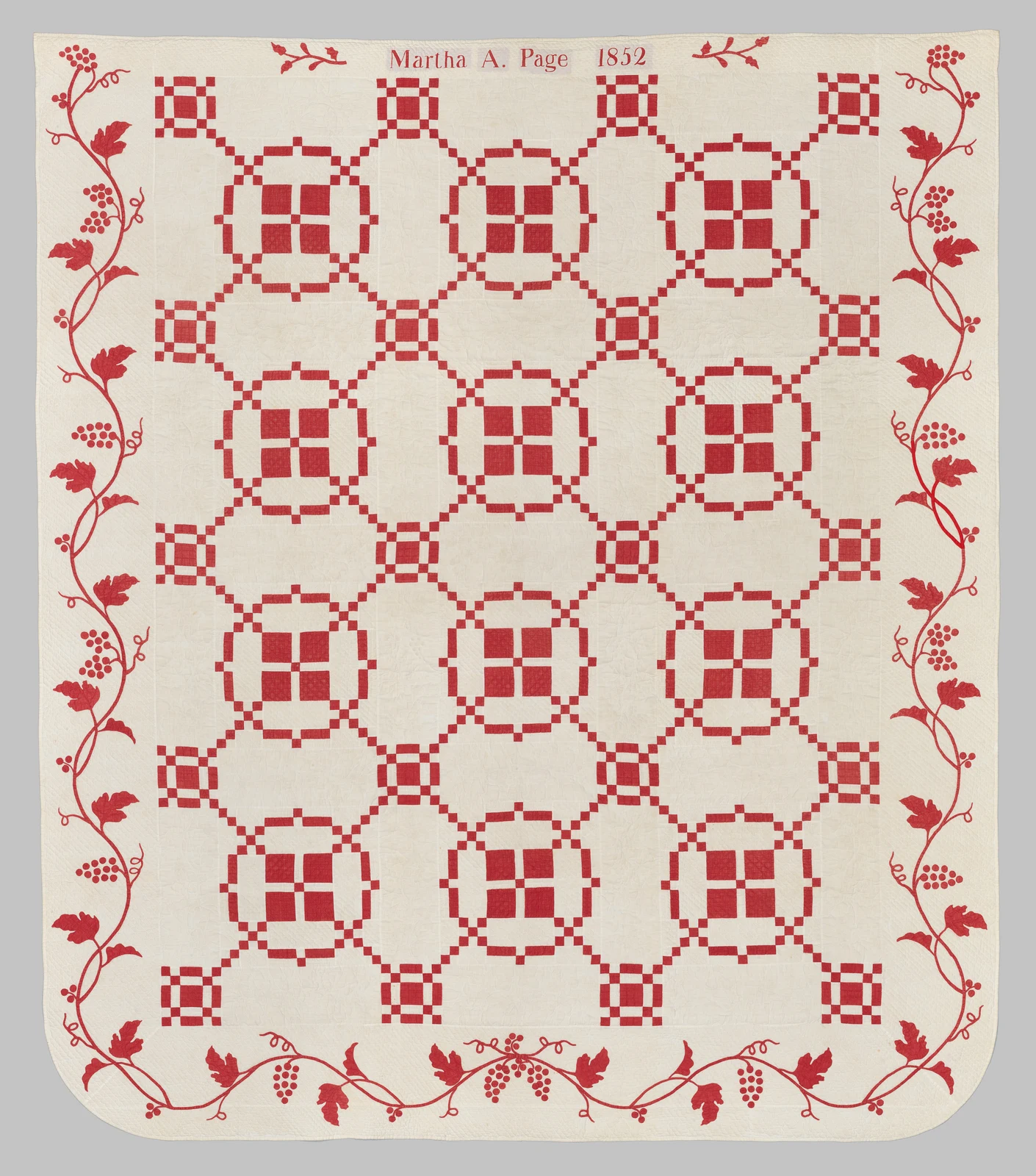
Small red and white squares form a repeating lattice across a cotton quilt.
Burgoyne Surrounded quiltMartha A. Page · 1852The Metropolitan Museum of Art · CC0
Image & source
Small red and white squares form a repeating lattice across a cotton quilt.

Textile / Source record

Burgoyne Surrounded quilt

Read the catalogue and evidence →
Maker
Martha A. Page
Date
1852
Medium
Cotton
Collection
The Metropolitan Museum of Art
Accession
2017.17
Credit
Purchase, Louis and Virginia Clemente Foundation Inc. Gift, 2017
Rights
Public domain · CC0

Public domain · CC0. Resized and converted to WebP; no recoloring. Homepage details may be cropped; work record presents the full image. Editorial views may show a detail.

Institution’s full-resolution image ↗Museum reuse policy ↗Original museum record ↗Read the CC0 dedication ↗

Textile / United States

How does repetition make a place?

Small units join into larger squares, then into a field. The border holds the repeated pattern in place, giving the eye somewhere to return.

Look closer →
04
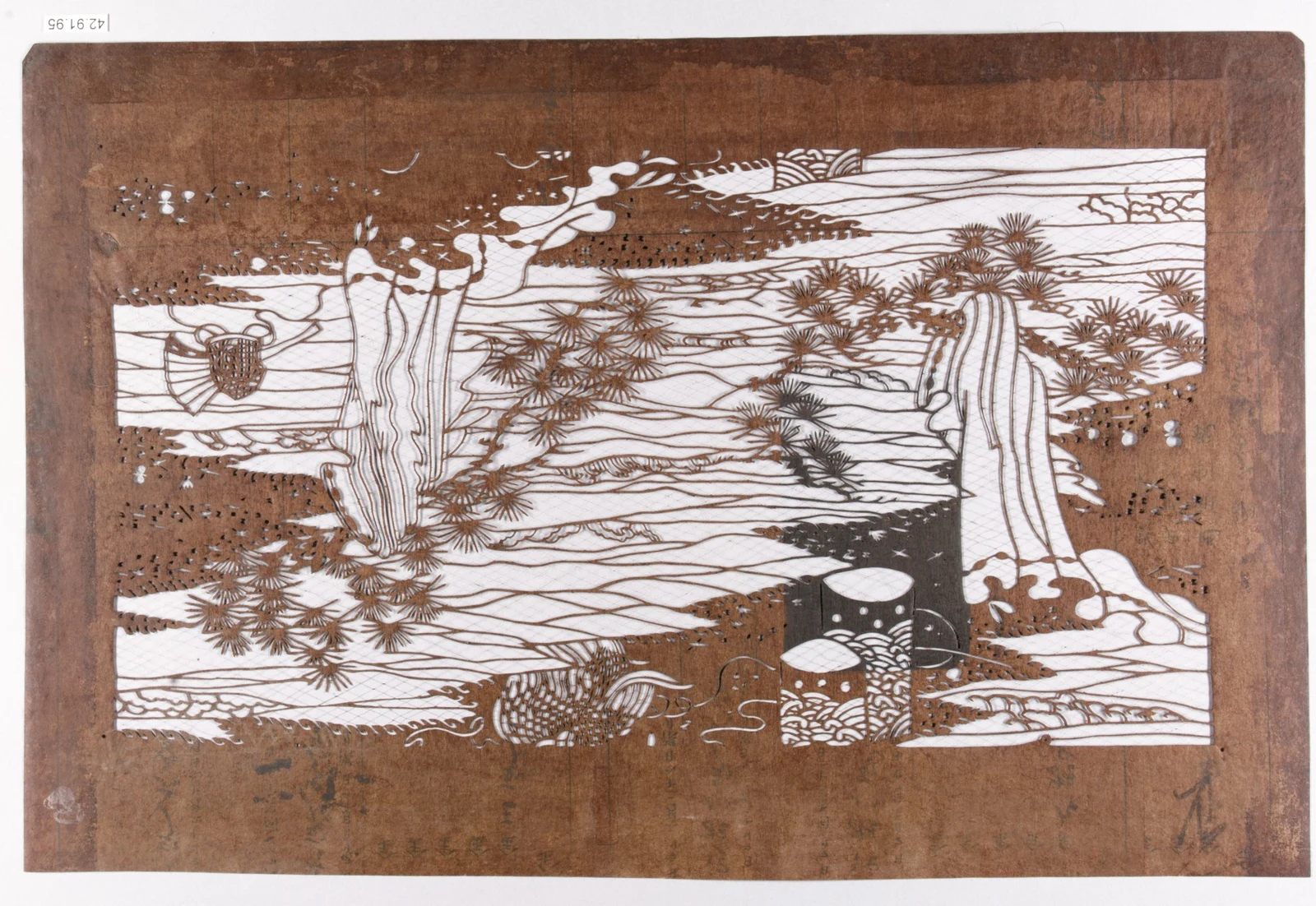
A cut-paper pattern arranges dark and light shapes for repeated transfer.
Stencil with Theme from MatsukazeMaker unrecorded · 19th centuryThe Metropolitan Museum of Art · CC0
Image & source
A cut-paper pattern arranges dark and light shapes for repeated transfer.

Pattern / Source record

Stencil with Theme from Matsukaze

Read the catalogue and evidence →
Maker
Maker unrecorded
Date
19th century
Medium
Paper, silk
Collection
The Metropolitan Museum of Art
Accession
42.91.95
Credit
Gift of Mrs. Horace Havemeyer, 1942
Rights
Public domain · CC0

Public domain · CC0. Resized and converted to WebP; no recoloring. Homepage details may be cropped; work record presents the full image. Editorial views may show a detail.

Institution’s full-resolution image ↗Museum reuse policy ↗Original museum record ↗Read the CC0 dedication ↗

Pattern / Japan

Can an absence become a mark?

The cut spaces matter as much as the remaining paper. What we see here is also a means of transferring a design onto another surface.

Look closer →
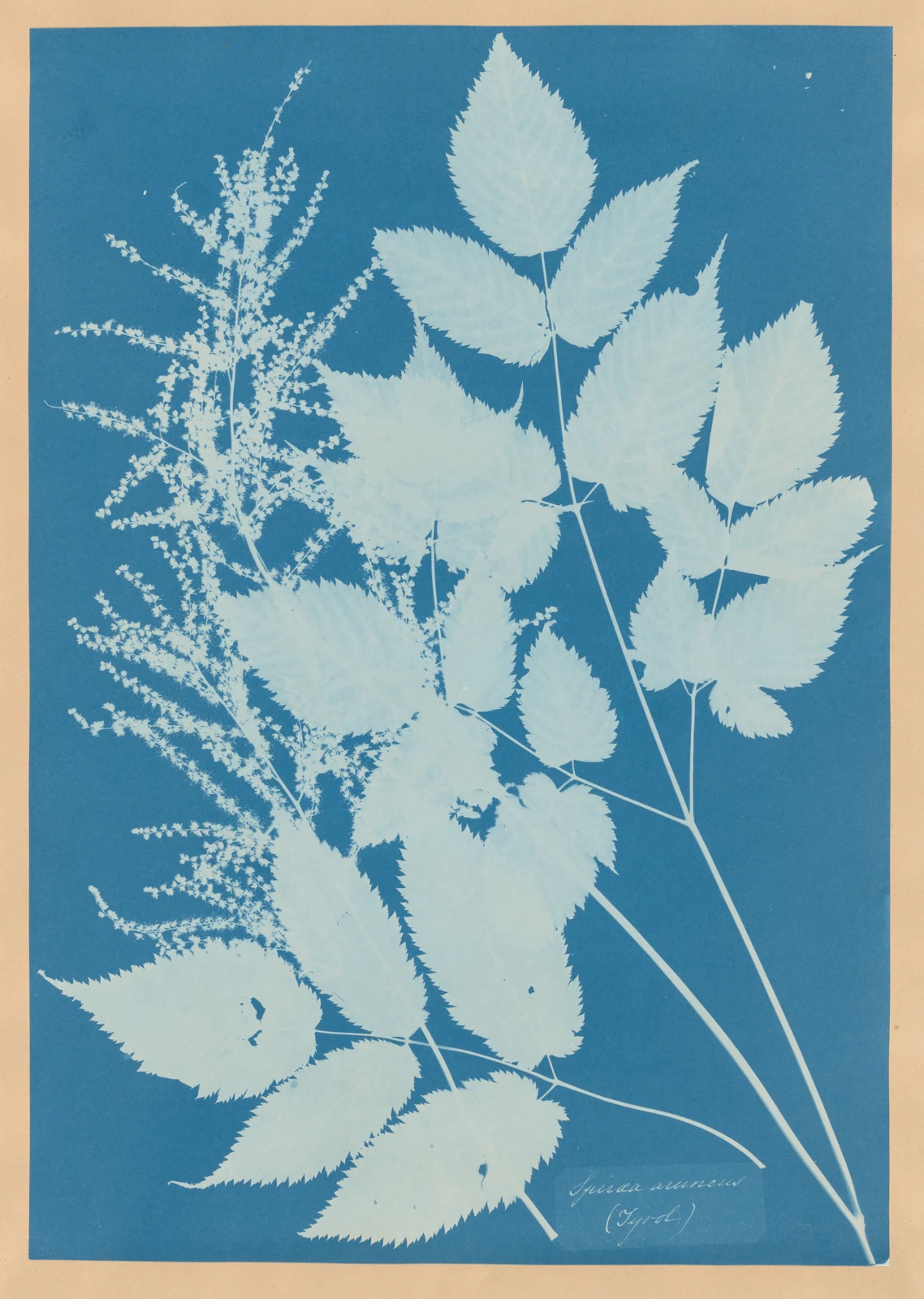
05
Pale branching leaves and stems appear against a deep cyanotype blue.
Spiraea aruncus (Tyrol)Anna Atkins · 1851–54The Metropolitan Museum of Art · CC0
Image & source
Pale branching leaves and stems appear against a deep cyanotype blue.

Photography / Source record

Spiraea aruncus (Tyrol)

Read the catalogue and evidence →
Maker
Anna Atkins
Date
1851–54
Medium
Cyanotype
Collection
The Metropolitan Museum of Art
Accession
2004.172
Credit
Purchase, Alfred Stieglitz Society Gifts, 2004
Rights
Public domain · CC0

Public domain · CC0. Resized and converted to WebP; no recoloring. Homepage details may be cropped; work record presents the full image. Editorial views may show a detail.

Institution’s full-resolution image ↗Museum reuse policy ↗Original museum record ↗Read the CC0 dedication ↗

Photography / Britain

What does a shadow remember?

The branching silhouette keeps a plant's outline while transforming its surface into a pale presence against blue. Fine divisions slow the eye down.

Look closer →
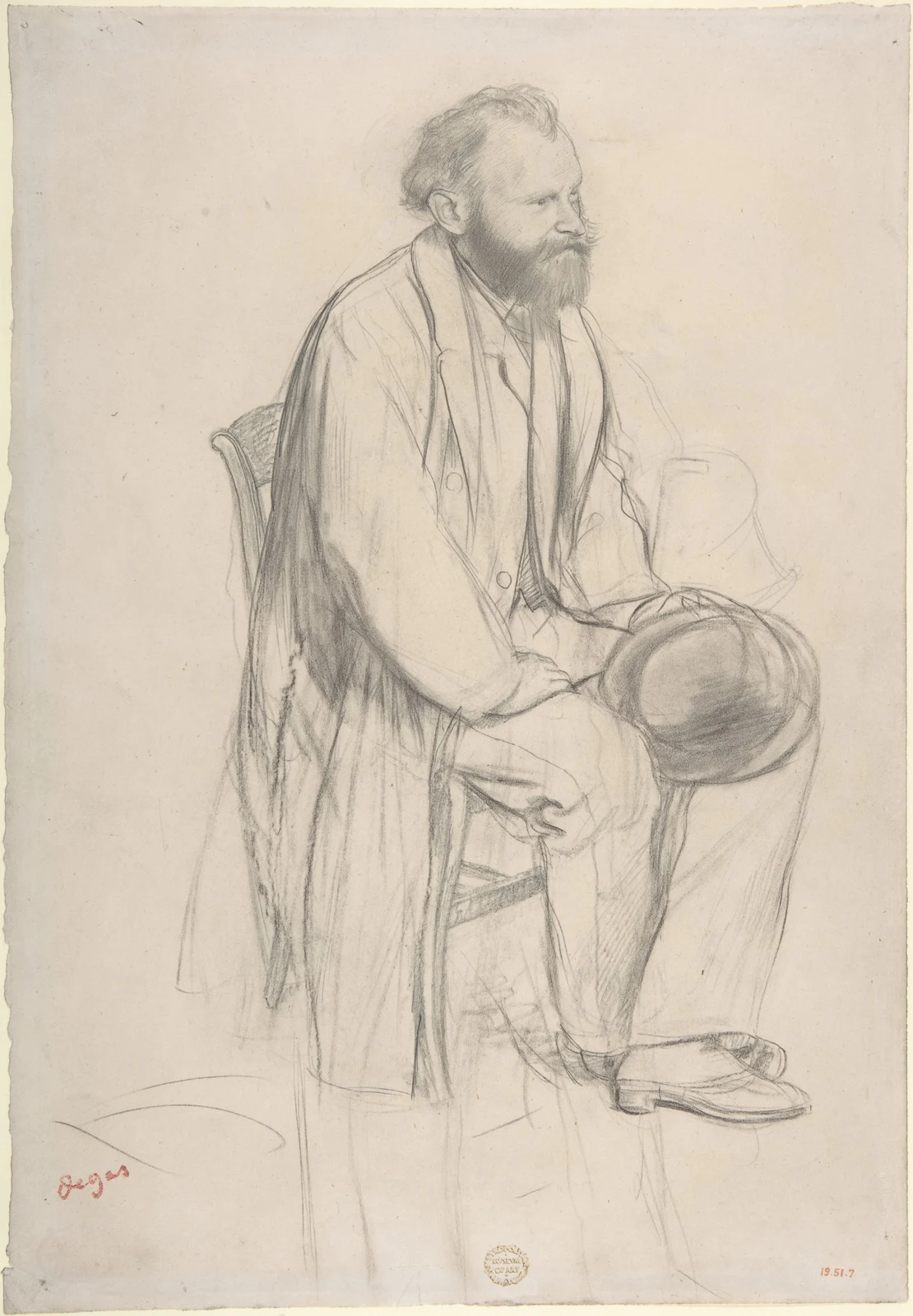
06
A seated man holds his hat; searching graphite and chalk lines describe his pose.
Édouard Manet, seatedEdgar Degas · ca. 1868The Metropolitan Museum of Art · CC0
Image & source
A seated man holds his hat; searching graphite and chalk lines describe his pose.

Drawing / Source record

Édouard Manet, seated

Read the catalogue and evidence →
Maker
Edgar Degas
Date
ca. 1868
Medium
Graphite and black chalk
Collection
The Metropolitan Museum of Art
Accession
19.51.7
Credit
Rogers Fund, 1918
Rights
Public domain · CC0

Public domain · CC0. Resized and converted to WebP; no recoloring. Homepage details may be cropped; work record presents the full image. Editorial views may show a detail.

Institution’s full-resolution image ↗Museum reuse policy ↗Original museum record ↗Read the CC0 dedication ↗

Drawing / France

When is a line finished?

Some edges are firm, others searching. The seated figure emerges from differences in pressure and density as much as from an unbroken outline.

Look closer →
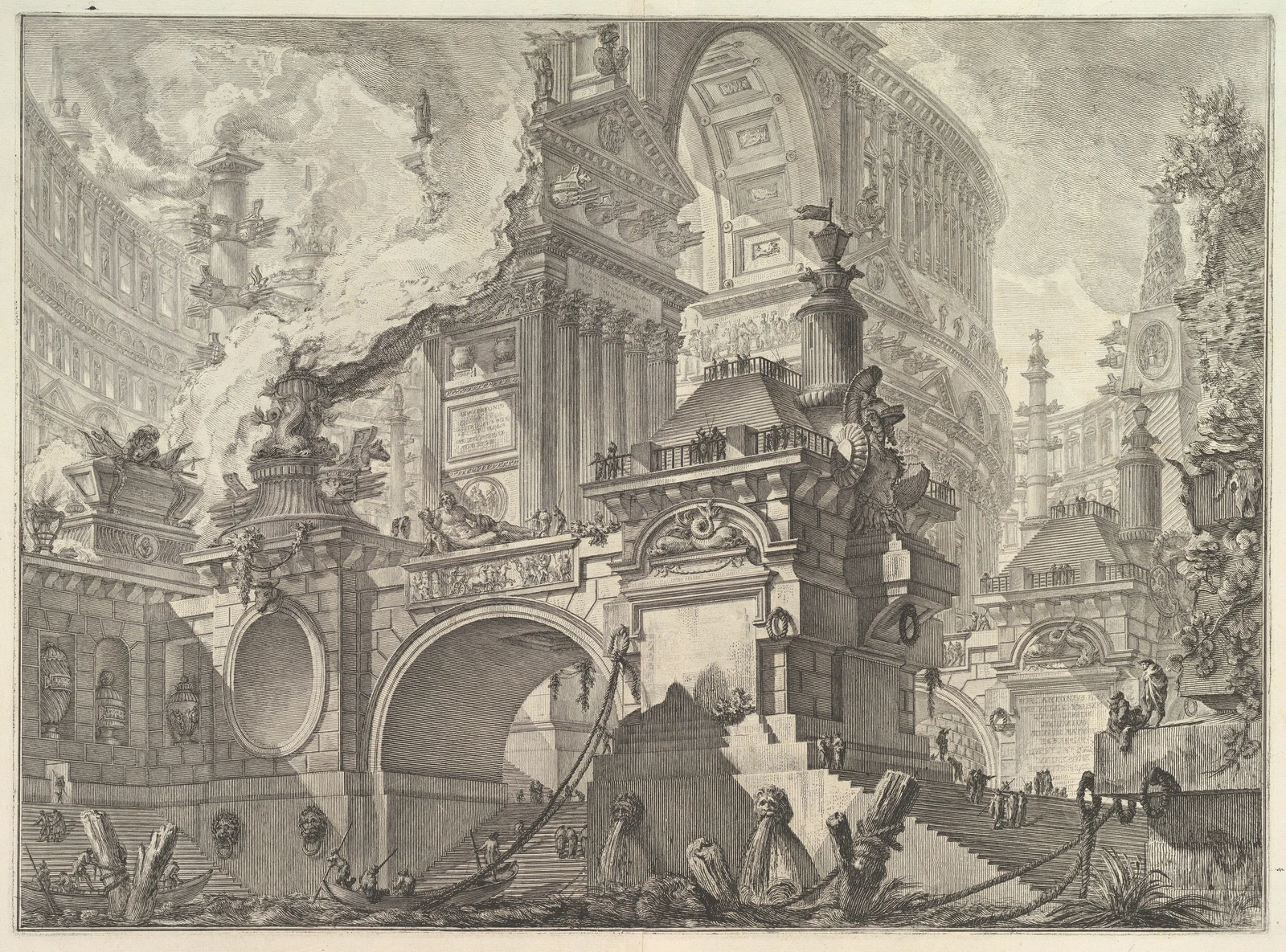
07
An elaborate imagined harbor unfolds through arches, columns and receding space.
An imagined Roman harborGiovanni Battista Piranesi · ca. 1749–50The Metropolitan Museum of Art · CC0
Image & source
An elaborate imagined harbor unfolds through arches, columns and receding space.

Architecture / Source record

An imagined Roman harbor

Read the catalogue and evidence →
Maker
Giovanni Battista Piranesi
Date
ca. 1749–50
Medium
Etching, engraving, drypoint; second state of seven (Robison)
Collection
The Metropolitan Museum of Art
Accession
37.45.3(41)
Credit
Harris Brisbane Dick Fund, 1937
Rights
Public domain · CC0

Public domain · CC0. Resized and converted to WebP; no recoloring. Homepage details may be cropped; work record presents the full image. Editorial views may show a detail.

Institution’s full-resolution image ↗Museum reuse policy ↗Original museum record ↗Read the CC0 dedication ↗

Architecture / Italy

Can a drawing build a world?

Architecture repeats into depth. The eye moves through successive frames, as if the image were a space to enter rather than a surface to face.

Look closer →
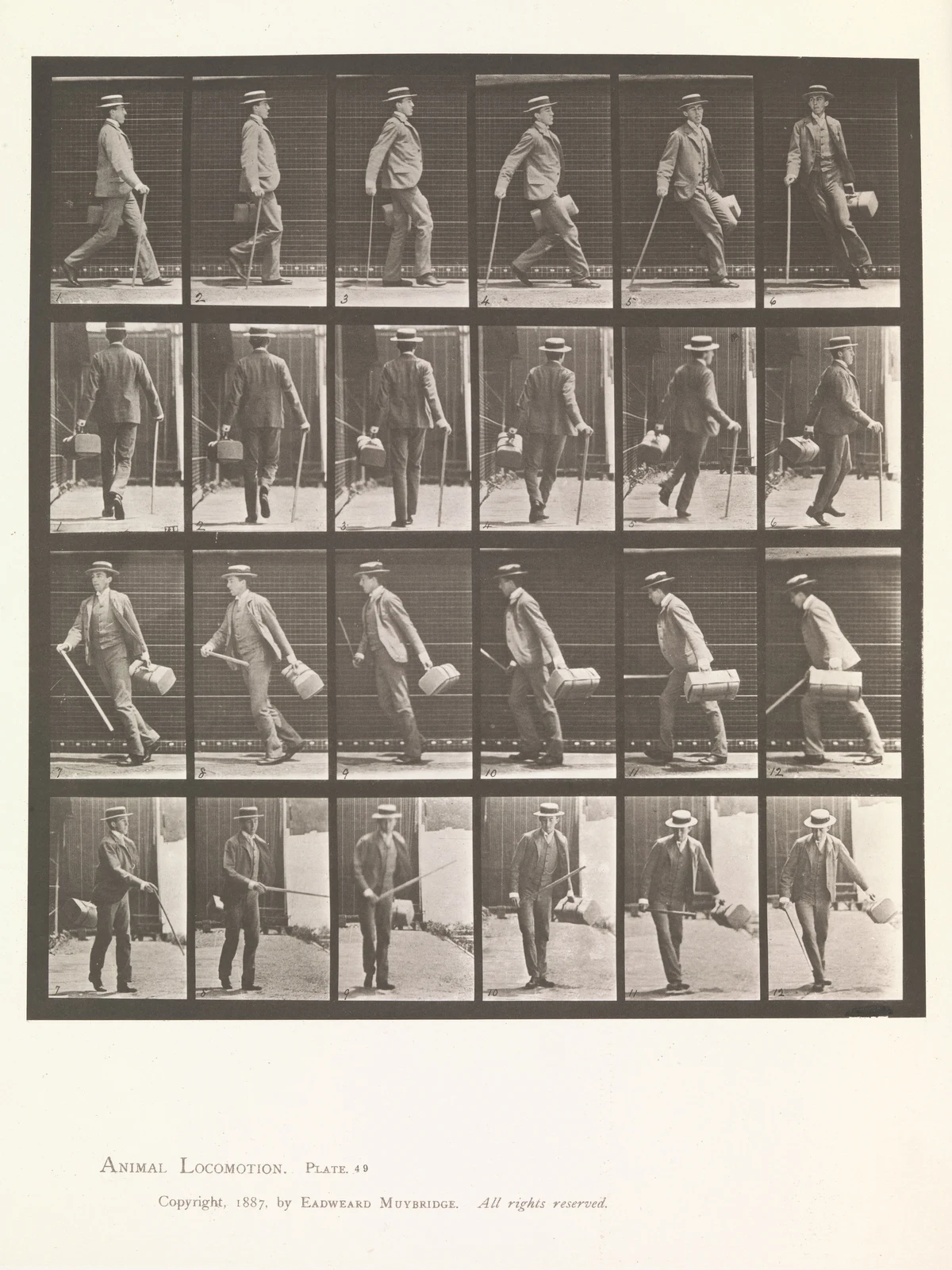
08
Sequential photographs set moments of bodily movement beside one another.
Animal Locomotion: a sequenceEadweard Muybridge · 1880sThe Metropolitan Museum of Art · CC0
Image & source
Sequential photographs set moments of bodily movement beside one another.

Movement / Source record

Animal Locomotion: a sequence

Read the catalogue and evidence →
Maker
Eadweard Muybridge
Date
1880s
Medium
Photogravures
Collection
The Metropolitan Museum of Art
Accession
1991.1135.7
Credit
Rogers Fund, transferred from the Library
Rights
Public domain · CC0

Public domain · CC0. Resized and converted to WebP; no recoloring. Homepage details may be cropped; work record presents the full image. Editorial views may show a detail.

Institution’s full-resolution image ↗Museum reuse policy ↗Original museum record ↗Read the CC0 dedication ↗

Movement / United States

Where does one gesture end?

A sequence lets the eye travel between separated moments. Each frame is still, yet the intervals invite a reader to reconstruct a movement.

Look closer →

Now make a relation of your own.

Choose two works. Follow a shape, an interval or a repeated mark. Name what the comparison helps you see—and where the resemblance stops.

Open your collection →