Ceramics
Oil or Vinegar Cruet
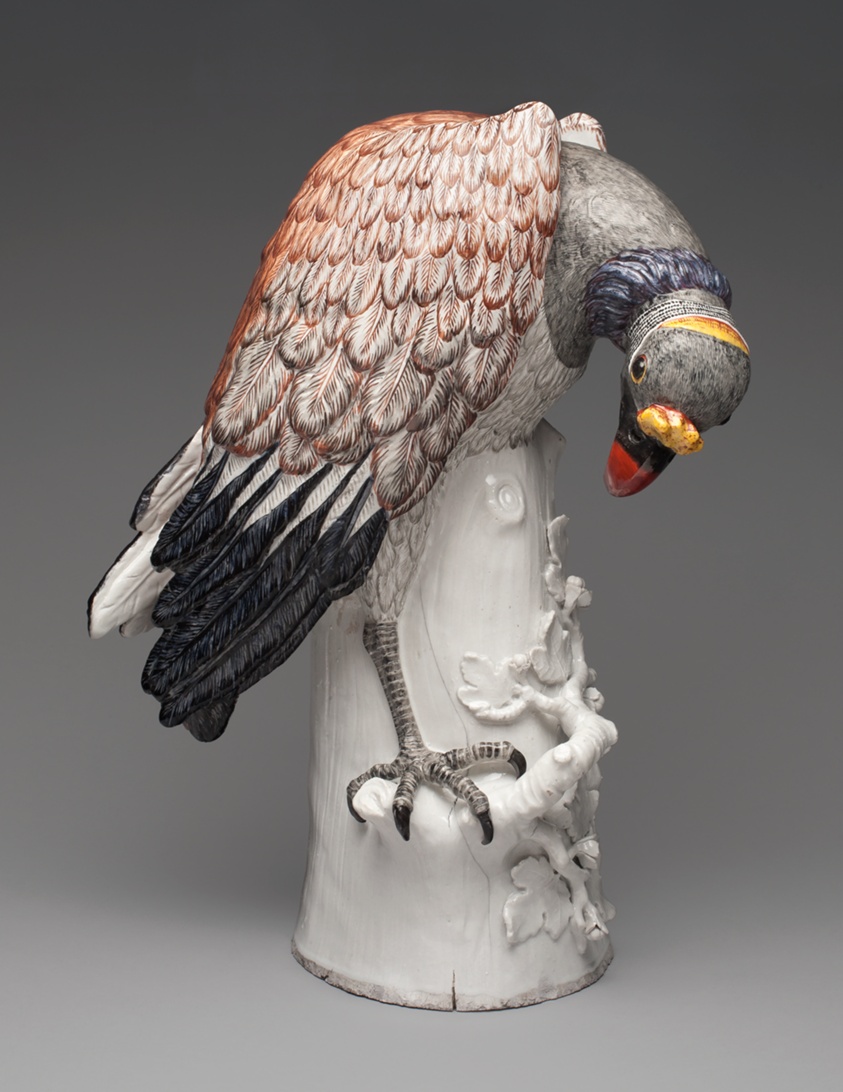
Meissen Porcelain Manufactory (1710–present) Model by Johann Joachim Kändler (born Saxony [now Germany], 1706–1775) Meissen, Electorate of Saxony (now Germany). c. 1737. Enameled and gilded hard-paste porcelain. Explore the catalogue record, image rights and documented connections from The Art Institute of Chicago.
A record, with reasons
Ways into this work
Open a description to see its meaning and evidence, or follow it into the collection.
Catalogue knowledge
Normalized from the museum’s record.
CeramicsObject type
Ceramics is a type of object named in the museum catalogue.
An explicitly supplied catalogue description, normalized conservatively. It does not independently establish attribution, completeness, symbolism or historical influence.
The Art Institute of Chicago supplies “Ceramics” in its object type field. This label was normalized by the documented import rule.
Ceramics
Catalogue: The Art Institute of Chicago. Automated source-field normalization; no independent visual interpretation.
Source normalization checked 2026-10-21 · 2026-10-20.1
PorcelainMaterial
Porcelain is a material named in the museum catalogue.
An explicitly supplied catalogue description, normalized conservatively. It does not independently establish attribution, completeness, symbolism or historical influence.
The Art Institute of Chicago supplies “Enameled and gilded hard-paste porcelain; hard-paste porcelain; porcelain; ceramic; inorganic material” in its medium/materials field. This label was normalized by the documented import rule.
Enameled and gilded hard-paste porcelain; hard-paste porcelain; porcelain; ceramic; inorganic material
Catalogue: The Art Institute of Chicago. Automated source-field normalization; no independent visual interpretation.
Source normalization checked 2026-10-21 · 2026-10-20.1
Human-figureSubject
Human-figure is a subject named in the museum catalogue.
An explicitly supplied catalogue description, normalized conservatively. It does not independently establish attribution, completeness, symbolism or historical influence.
The Art Institute of Chicago supplies “women” in its subjects field. This label was normalized by the documented import rule.
women
Catalogue: The Art Institute of Chicago. Automated source-field normalization; no independent visual interpretation.
Source normalization checked 2026-10-21 · 2026-10-20.1
Visual observation
Observations of the displayed image.
Not yet assessed.
Artologium reading
Authored connections, open to interpretation.
Not yet assessed.
These descriptions belong to this object and its selected image. Unlisted features may be unassessed. Editorial observations and readings were developed with AI assistance; they do not establish the maker’s intent.
Keep something. Change the setting.
Follow a connection
A shared description opens a comparison. It does not establish historical influence.