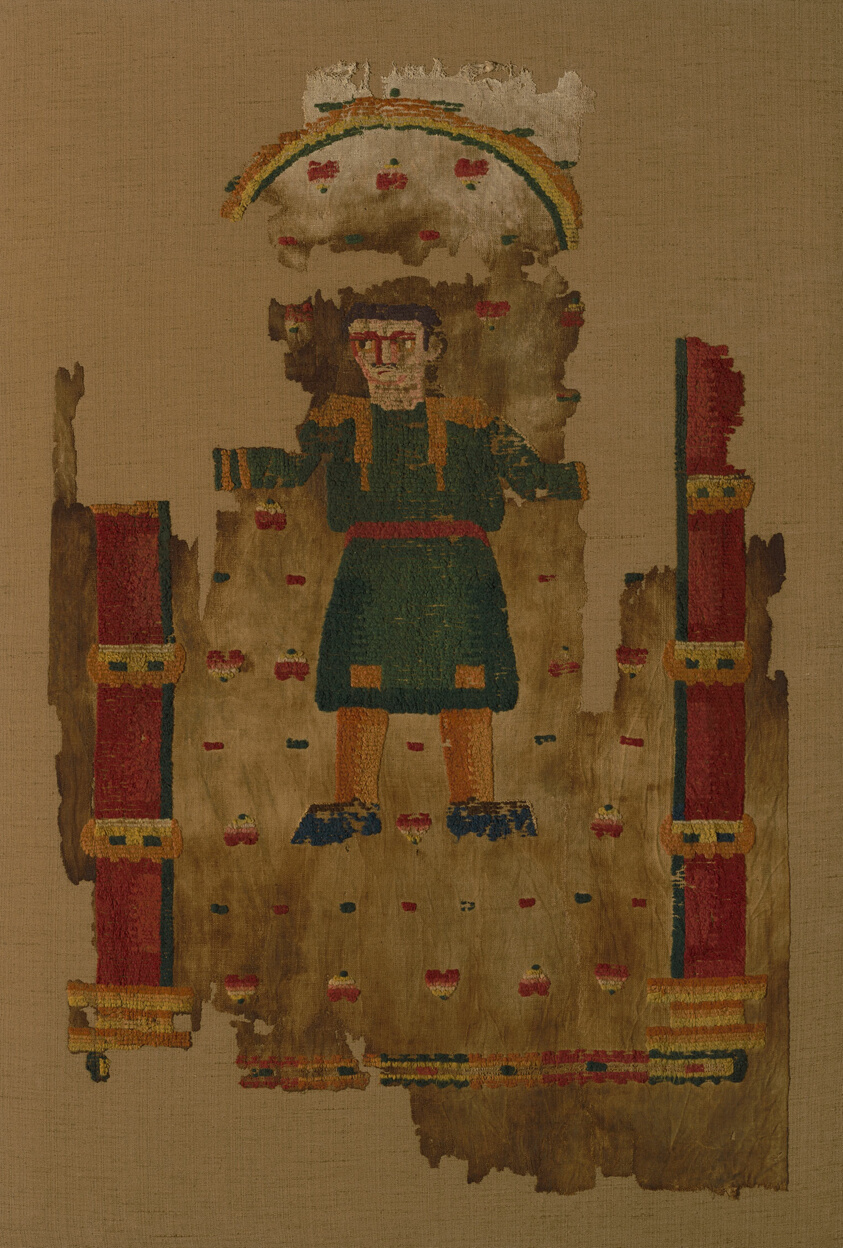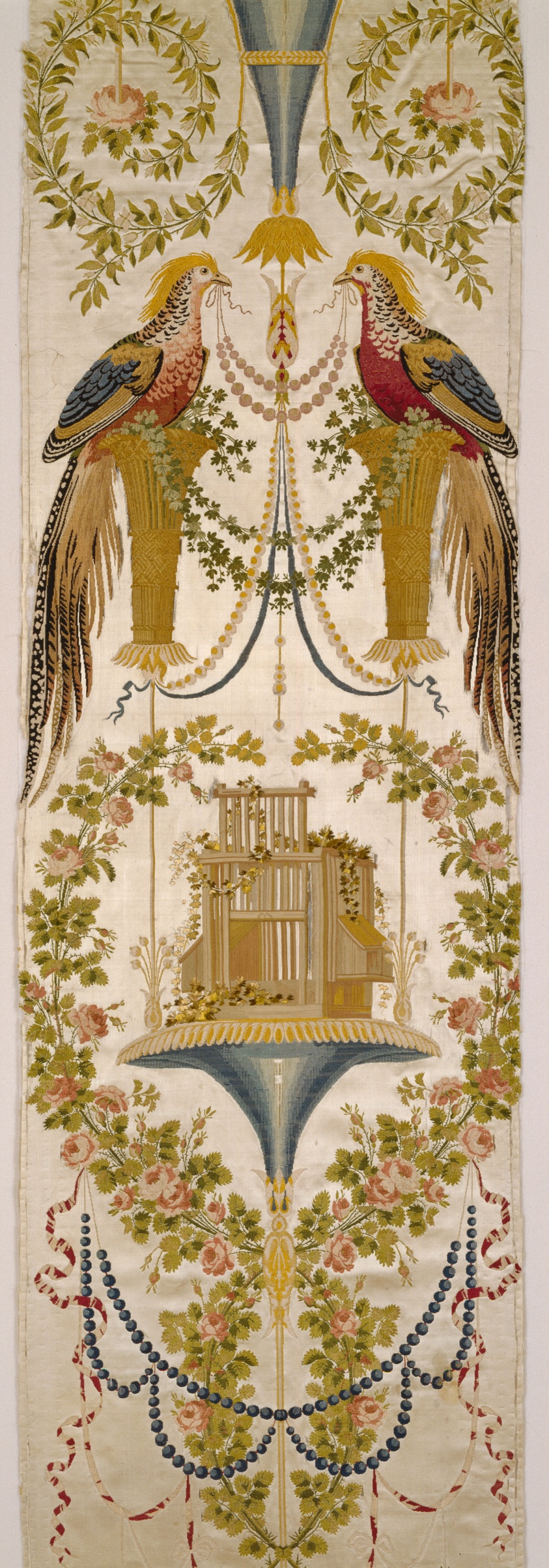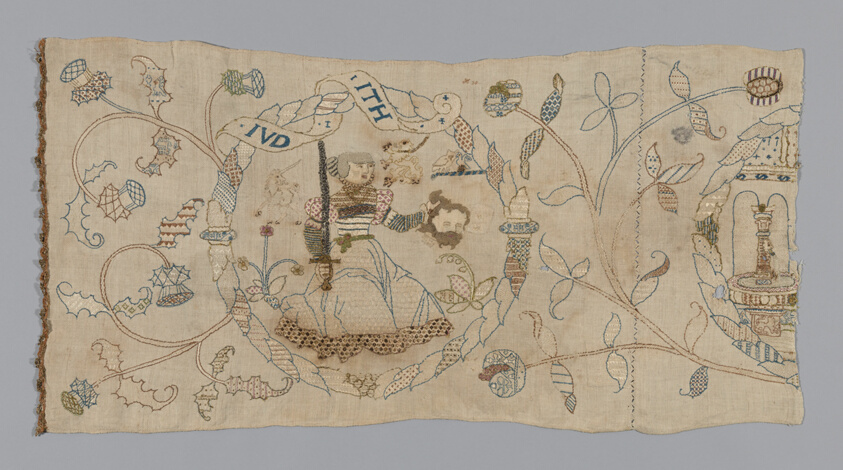
Textile
Two Border Fragments
Spain. Late 16th/early 17th century. Linen, plain weave; pulled thread work embroidered with silk back, running and two-sided Italian cross stitches; edged with darning stitch. Explore the catalogue record, image rights and documented connections from The Art Institute of Chicago.
Follow the maker / Across collections & investigations
Spain across 1 collection
Each museum’s exact creator wording is preserved on its record. Reconciled maker links group works attributed directly to Spain while keeping workshop, studio, or “after” attributions distinct.
- Chasuble with Orphrey BandsThe Art Institute of Chicago · 17th century · 1891.13 · Compare side by side →
- Dalmatic with Apparel and Orphrey BandThe Art Institute of Chicago · 17th century · 1891.14a · Compare side by side →
A record, with reasons
Ways into this work
Open a description to see its meaning and evidence, or follow it into the collection.
Catalogue knowledge
Normalized from the museum’s record.
TextileObject type
An object classified as a textile.
A picture of cloth is not a textile object.
The Art Institute of Chicago supplies “Textile” in its object type field. This label was normalized by the documented import rule.
Textile
Catalogue: The Art Institute of Chicago. Automated source-field normalization; no independent visual interpretation.
Source normalization checked 2026-10-21 · 2026-10-20.1
SilkMaterial
Silk recorded in the object's medium.
A depicted material or colour resemblance is a separate assertion.
The Art Institute of Chicago supplies “Linen, plain weave; pulled thread work embroidered with silk back, running and two-sided Italian cross stitches; edged with darning stitch; linen (material); silk (fiber)” in its medium/materials field. This label was normalized by the documented import rule.
Linen, plain weave; pulled thread work embroidered with silk back, running and two-sided Italian cross stitches; edged with darning stitch; linen (material); silk (fiber)
Catalogue: The Art Institute of Chicago. Automated source-field normalization; no independent visual interpretation.
Source normalization checked 2026-10-21 · 2026-10-20.1
LinenMaterial
Linen is a material named in the museum catalogue.
An explicitly supplied catalogue description, normalized conservatively. It does not independently establish attribution, completeness, symbolism or historical influence.
The Art Institute of Chicago supplies “Linen, plain weave; pulled thread work embroidered with silk back, running and two-sided Italian cross stitches; edged with darning stitch; linen (material); silk (fiber)” in its medium/materials field. This label was normalized by the documented import rule.
Linen, plain weave; pulled thread work embroidered with silk back, running and two-sided Italian cross stitches; edged with darning stitch; linen (material); silk (fiber)
Catalogue: The Art Institute of Chicago. Automated source-field normalization; no independent visual interpretation.
Source normalization checked 2026-10-21 · 2026-10-20.1
EmbroideryTechnique
Embroidery is a making process named in the museum catalogue.
An explicitly supplied catalogue description, normalized conservatively. It does not independently establish attribution, completeness, symbolism or historical influence.
The Art Institute of Chicago supplies “Linen, plain weave; pulled thread work embroidered with silk back, running and two-sided Italian cross stitches; edged with darning stitch; embroidering; plain weaving” in its medium/techniques field. This label was normalized by the documented import rule.
Linen, plain weave; pulled thread work embroidered with silk back, running and two-sided Italian cross stitches; edged with darning stitch; embroidering; plain weaving
Catalogue: The Art Institute of Chicago. Automated source-field normalization; no independent visual interpretation.
Source normalization checked 2026-10-21 · 2026-10-20.1
WeavingTechnique
Weaving is a making process named in the museum catalogue.
An explicitly supplied catalogue description, normalized conservatively. It does not independently establish attribution, completeness, symbolism or historical influence.
The Art Institute of Chicago supplies “Linen, plain weave; pulled thread work embroidered with silk back, running and two-sided Italian cross stitches; edged with darning stitch; embroidering; plain weaving” in its medium/techniques field. This label was normalized by the documented import rule.
Linen, plain weave; pulled thread work embroidered with silk back, running and two-sided Italian cross stitches; edged with darning stitch; embroidering; plain weaving
Catalogue: The Art Institute of Chicago. Automated source-field normalization; no independent visual interpretation.
Source normalization checked 2026-10-21 · 2026-10-20.1
PlantsSubject
Visible plant forms in the image.
Subject identification does not establish symbolic meaning or historical influence.
The Art Institute of Chicago supplies “flowers” in its subjects field. This label was normalized by the documented import rule.
flowers
Catalogue: The Art Institute of Chicago. Automated source-field normalization; no independent visual interpretation.
Source normalization checked 2026-10-21 · 2026-10-20.1
Visual observation
Observations of the displayed image.
Not yet assessed.
Artologium reading
Authored connections, open to interpretation.
Not yet assessed.
These descriptions belong to this object and its selected image. Unlisted features may be unassessed. Editorial observations and readings were developed with AI assistance; they do not establish the maker’s intent.
Keep something. Change the setting.
Follow a connection
A shared description opens a comparison. It does not establish historical influence.