Afterlives / Interactive passage
A tree crosses the page.
Why does the painting differ from the print he owned?
An interactive passage / Select a stop
Distinguish the design, the sheet and the painted adaptation.
1857
A design with several states
A title identifies a composition; it does not make every impression interchangeable. Follow the source article’s comparison of print states.
Hiroshige, The Plum Garden at Kameido
Van Gogh’s 1887 Flowering Plum Orchard adapts Hiroshige’s plum-garden design; the British Museum identifies his fourth-state impression and a tracing.
The design, the owned impression, the tracing and the painting are separate entities.
Inspect this connection ↓The link preserves this stop and research version. Its social image represents the whole investigation.
Read the complete passage
1857 · A design with several states
A title identifies a composition; it does not make every impression interchangeable. Follow the source article’s comparison of print states.
The intermediary · An owned sheet and a tracing
The museum article identifies an impression and a tracing. These provide more specific evidence than general admiration for Japanese art.
1887 · The frame changes the encounter
Korenberg argues that the painting also resembles an earlier state. The orange border is only the most conspicuous change; inspect the sky, grass and flower centres at the source.
01 / Close reading
The familiar branch hides a less familiar puzzle.
The thick foreground branch interrupts the orchard before the eye can reach its small figures. In Van Gogh’s painting, it also leads into an orange border filled with Japanese characters. The tree and the added frame compete to decide where the picture ends.
The Van Gogh Museum’s gallery text identifies those borders as additions. But the painting’s differences are not confined to its frame. Capucine Korenberg’s British Museum account argues that its red sky, yellow flower centres and blue shading in the grass recall an earlier print state than the one Van Gogh owned.
02 / Historical account
The sheet he owned does not settle the source.
Korenberg identifies Van Gogh’s owned impression as fourth state, with a surviving tracing. Her study of 82 photographed impressions distinguishes four states; eight photographs could not be assigned because their evidence was obscured or inadequate. State identification rests on combinations of details, not simply a red sky.
In the museum article, she proposes that the painting also draws on an earlier impression, perhaps seen in Paris. The particular additional sheet and encounter remain unidentified. The owned print, tracing and painting give us a real chain of objects—and a reason not to imagine that the chain explains every painted choice.
Keep the identities distinct
Works, people & carriers.
design
Hiroshige, The Plum Garden at Kameido
1857
The design has multiple surviving print states.
Open the source record ↗work
Fourth-state impression owned by Vincent van Gogh
19th century
Identified in the museum article; not substituted with an arbitrary impression.
Open the source record ↗document
Van Gogh’s tracing after the print
1887
Externally linked research image.
Open the source record ↗work
Flowering Plum Orchard (after Hiroshige)
1887
Van Gogh Museum s0115V1962.
Open the source record ↗The research stays attached
How we know.
Source verification and prose revised with AI assistance. Independent specialist review remains pending.
Editorial review · 2026-10-17
The print he owned may not explain every detail he painted.
Checked 2026-10-17 · a-tree-crosses-the-page.3
Download the research record ↓documentedVan Gogh’s 1887 Flowering Plum Orchard adapts Hiroshige’s plum-garden design; the British Museum identifies his fourth-state impression and a tracing.
Relationship: adaptation
Hiroshige, The Plum Garden at Kameido Flowering Plum Orchard (after Hiroshige)
The limit: The design, the owned impression, the tracing and the painting are separate entities.
- Flowering Plum Orchard (after Hiroshige) ↗
Painting commentary; collection number s0115V1962
- Tracking down the Plum Garden: Hiroshige, Van Gogh and the Edo 'Instagram' ↗
Discussion and caption identifying the fourth-state impression owned by Van Gogh and his tracing
documentedThe Van Gogh Museum identifies the painting’s orange borders and Japanese characters as additions to the borrowed composition.
Relationship: catalogue fact
The limit: This does not make the characters a verified translation of the print’s original inscriptions.
- Permanent collection gallery texts: Dreaming of Japan ↗
PDF p. 9, Flowering Plum Orchard (after Hiroshige)
attributedCapucine Korenberg argues that the painting also recalls an earlier print state, despite Van Gogh’s owned fourth-state impression and surviving tracing.
Relationship: attributed reference
The limit: This is the researcher’s inference. An additional impression, its owner and a Paris encounter are not established.
- Tracking down the Plum Garden: Hiroshige, Van Gogh and the Edo 'Instagram' ↗
Van Gogh’s inspiration: a link to Hiroshige, final comparison of sky, flower centres and grass
documentedKorenberg’s 2025 study examined photographs of 82 impressions and distinguished four printing states; eight impressions could not be assigned.
Relationship: catalogue fact
The limit: The study uses surviving impressions and available photographs. A red sky alone does not prove a first state.
- Variations in Hiroshige’s Print ‘The Plum Garden at Kameido’ (2025), Heritage 8(2), 74 ↗
Section 3.5, Table 5 and conclusions
Source ledger · 4 records
scholarship · en
Variations in Hiroshige’s Print ‘The Plum Garden at Kameido’ (2025), Heritage 8(2), 74 ↗
Capucine Korenberg
Checked 2026-10-17 · Indexed source text. Relevant indexed primary-source text checked. Direct scripted access was blocked, empty or incomplete; this is not recorded as a successful full-page retrieval.
Locate: Section 3.5, Table 5 and conclusions
Supports: Study of 82 photographed impressions; four states distinguished; eight unassigned. A red sky alone is not sufficient state evidence.
Limit: The photographic sample concerns surviving impressions. The painting’s proposed earlier-state source is an argument in the separate museum article, not a demonstrated additional sheet.
institutional account · en
Permanent collection gallery texts: Dreaming of Japan ↗
Van Gogh Museum
Checked 2026-10-17 · Institutional PDF. Relevant source passage checked in the institutional PDF; catalogue reproductions remain subject to their own image rights.
Locate: PDF p. 9, Flowering Plum Orchard (after Hiroshige)
Supports: 1887 painting; changed colour and added orange borders with Japanese characters.
Limit: An institutional gallery interpretation, not a transcript establishing the characters as a translation.
object record · en
Flowering Plum Orchard (after Hiroshige) ↗
Van Gogh Museum
Checked 2026-10-17 · Indexed source text. Indexed work identification checked; narrative claims are separately supported by the museum’s gallery-text PDF.
Locate: Painting commentary; collection number s0115V1962
Supports: The 1887 adaptation of Hiroshige and added orange borders with Japanese characters.
Limit: Descriptive interpretation belongs to the museum. A reproduction of another impression must not be labeled as Vincent's own sheet.
institutional account · en
Tracking down the Plum Garden: Hiroshige, Van Gogh and the Edo 'Instagram' ↗
British Museum
Checked 2026-10-17 · Indexed source text. Relevant indexed primary-source text checked. Direct scripted access was blocked, empty or incomplete; this is not recorded as a successful full-page retrieval.
Locate: Discussion and caption identifying the fourth-state impression owned by Van Gogh and his tracing
Supports: A particular print state, a tracing and the 1887 painted adaptation; variation between impressions.
Limit: No claim that every surviving impression is identical. Museum photographs remain external references unless separately cleared.
Public life: reach, response, consequence
Reach. The surviving owned print and tracing establish a specific encounter with the design. No additional gallery encounter is documented.
Response. Korenberg proposes earlier-state features in the painting. This is a research interpretation rather than a new artist statement.
Consequence. The revised case complicates a one-sheet copying story while preserving the documented adaptation and the unresolved intermediary.
Versions & corrections
- a-tree-crosses-the-page.1 · 2026-10-17
First source-checked review edition. Historical claims and original readings are distinguished; image permissions are recorded separately.
- a-tree-crosses-the-page.2 · 2026-10-17
Recovered the museum article’s earlier-state argument, which the first edition omitted. Added Korenberg’s DOI-linked study, its 82-impression sample and eight unassigned cases. Kept the proposed additional impression and Paris encounter uncertain; checked orange borders against the museum gallery text.
- a-tree-crosses-the-page.3 · 2026-10-17
Recovered the museum article’s earlier-state argument, which the first edition omitted. Added Korenberg’s DOI-linked study, its 82-impression sample and eight unassigned cases. Kept the proposed additional impression and Paris encounter uncertain; checked orange borders against the museum gallery text. Bound the final passage stop to the attributed earlier-state inference as well as the border record.
Historical source assertions, editorial readings and image decisions are separate. A revision changes the research version and regenerates dependent summaries and exports.
Suggest a correction →The story branches
Carry a question forward.
These are editorial reading suggestions. Each investigation makes its own argument.
Follow prints into another setting.
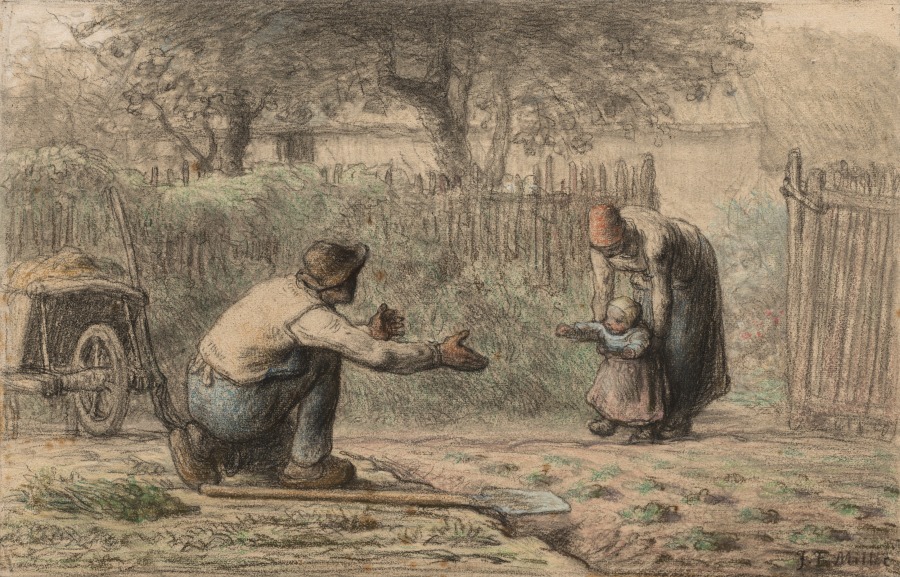
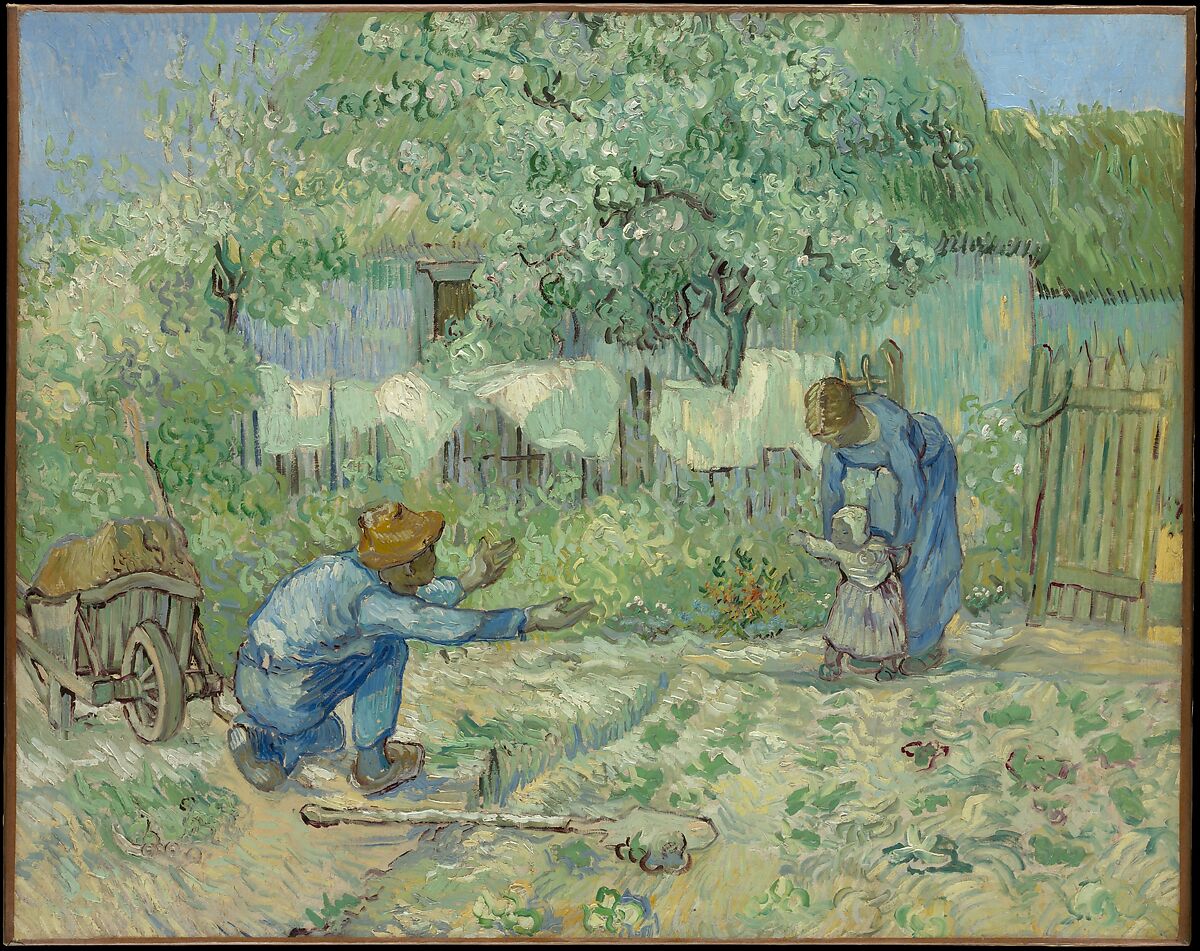
First Steps
- Maker
- Jean-François Millet
- Date
- c. 1859–66
- Collection
- The Cleveland Museum of Art
- Accession
- 1962.407
- Credit
- Gift of Mrs. Thomas H. Jones, Sr.
- Rights
- CC0
First Steps, after Millet
- Maker
- Vincent van Gogh
- Date
- 1890
- Collection
- The Metropolitan Museum of Art
- Accession
- 64.165.2
- Credit
- Gift of George N. and Helen M. Richard, 1964
- Rights
- CC0
A small gesture, carried forward
A documented connection
Follow the passageFollow prints into another setting.
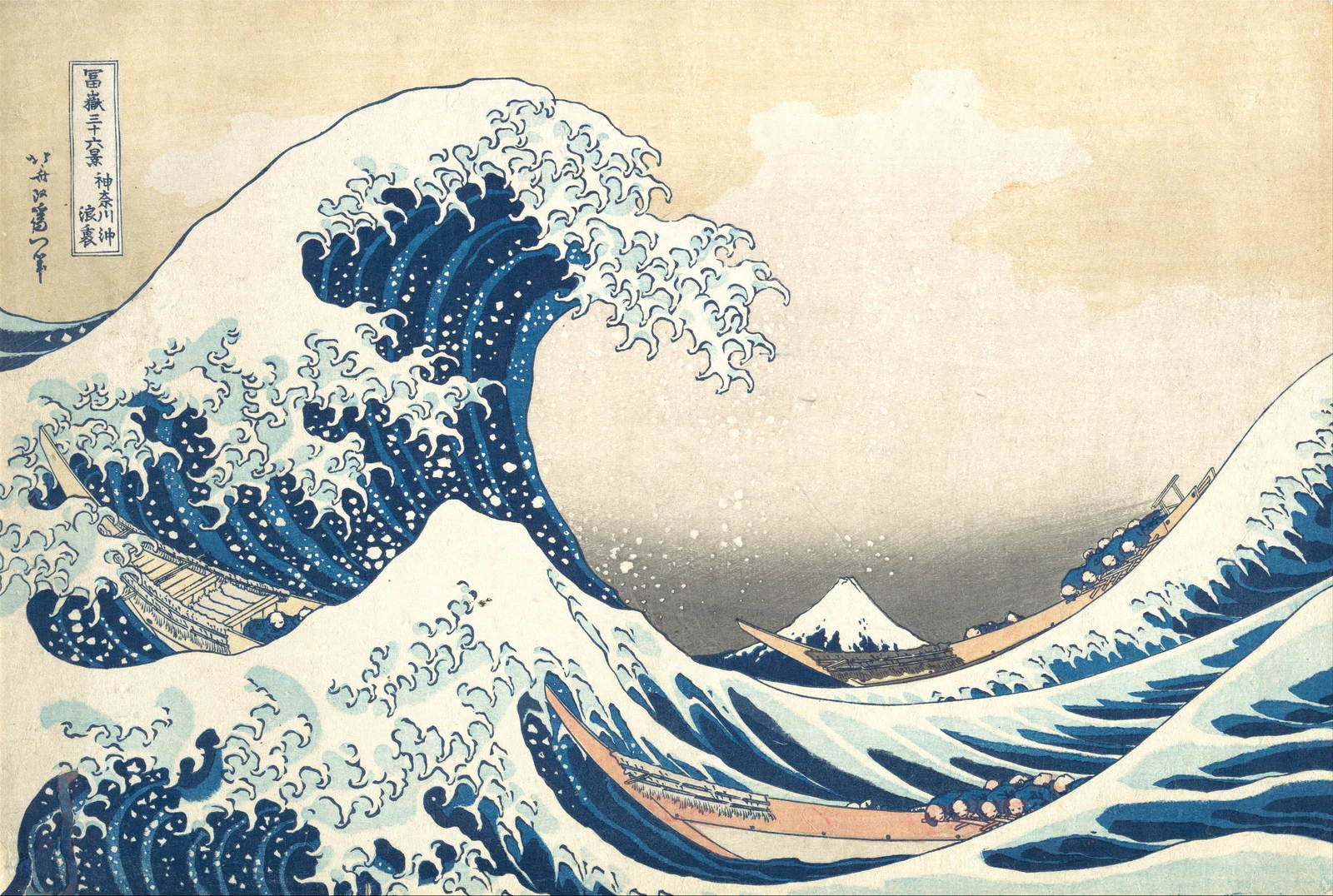

Under the Wave off Kanagawa (Kanagawa oki nami ura), also known as The Great Wave, from the series Thirty-six Views of Mount Fuji (Fugaku sanjūrokkei)
- Maker
- Katsushika Hokusai
- Date
- ca. 1830–32
- Collection
- The Metropolitan Museum of Art
- Accession
- JP1847
- Credit
- H. O. Havemeyer Collection, Bequest of Mrs. H. O. Havemeyer, 1929
- Rights
- CC0
A blue that crossed borders.
A connection attributed in the research
Read the visual essay