Afterlives / Visual essay
A dish translates porcelain.
Where does imitation end and invention begin?
A way into this story
Read three decisions: rim, surface, foot.
01 / Rim
Borrowed rhythm
The scalloped perimeter gives the eye a sequence of small rises and falls before it reaches the painted interior.
Inspect the evidence ↓02 / Surface
A different body
A visual relationship can survive a change of ceramic material. The object record identifies stonepaste.
Inspect the evidence ↓03 / Foot
A changed silhouette
The raised foot is where the museum sees an apparent Ottoman addition. The qualification belongs with the claim.
Inspect the evidence ↓
01 / Close reading
The rim sets a rhythm.
Start at the scalloped rim. Its repeated rises and hollows set a measured pace around the blue floral field. Inside, scrolling stems make looser turns. The dish holds those two kinds of movement together: a counted perimeter and a branching interior.
The overhead photograph flattens that meeting into a picture. The foot described by the catalogue belongs to the object’s profile, which this view does not show. Move between what the image makes visible and what the record adds: decoration, body and support are three decisions, rather than one copied surface.
02 / Historical account
The name of the model is not the material of the object.
The catalogue separates a porcelain precedent from a stonepaste object. That small distinction prevents a large mistake: a design can move without the same manufacturing process moving with it. Our connection therefore names a design relationship, and leaves questions of technical transfer to evidence about workshops and production.
It also changes the credit we give to the later maker. Selecting what remains recognizable and deciding how it works in another material are acts of making. We cannot recover the maker’s intention from this photograph, but we can avoid making the maker disappear behind the word imitation.
03 / Close reading
A borrowed surface can acquire a new stance.
A raised foot changes how the decorated field meets the table. Imagine the difference between a rim sitting close to its support and a field lifted above it. This is a question about the catalogue-described form; we cannot recover a dining scene or inspect the foot from the overhead image.
The Met calls the addition apparently Ottoman. That qualification leaves the useful tension intact: recognizable Chinese design features coexist with a different ceramic body and a proposed local addition. A close account can credit the later maker’s decisions without needing to name a single Chinese source dish.
Keep the identities distinct
Works, people & carriers.
tradition
Chinese porcelain prototypes
15th century
No single source vessel is identified.
Open the source record ↗work
Footed dish, Met 66.4.2
c. 1570–80
Stonepaste made in Iznik.
Open the source record ↗The research stays attached
How we know.
Source verification and prose revised with AI assistance. Independent specialist review remains pending.
Editorial review · 2026-10-17
Rim, decorated field and support are three separate decisions.
Checked 2026-10-17 · a-dish-translates-porcelain.3
Download the research record ↓attributedThe Met identifies Chinese porcelain precedents for this Iznik dish’s floral scrolls, foliate rim and palette, while describing its raised foot as apparently an Ottoman invention.
Relationship: attributed reference
Chinese porcelain prototypes Footed dish, Met 66.4.2
The limit: This is the museum’s attribution of design relationships. A particular Chinese source dish is not identified.
- Footed Dish with Foliate Rim in Imitation of Chinese Porcelain, 66.4.2 ↗
Opening commentary; material and date fields
documentedThe dish is catalogued as stonepaste painted in blue under a transparent glaze, made in Iznik about 1570–80.
Relationship: catalogue fact
The limit: The title’s reference to porcelain describes imitation; it does not change the recorded material to porcelain.
- Footed Dish with Foliate Rim in Imitation of Chinese Porcelain, 66.4.2 ↗
Opening commentary; material and date fields
Source ledger · 1 records
object record · en
Footed Dish with Foliate Rim in Imitation of Chinese Porcelain, 66.4.2 ↗
The Metropolitan Museum of Art
Checked 2026-10-17 · Source text. Relevant institutional record text checked through the research browser; direct scripted requests were rate-limited.
Locate: Opening commentary; material and date fields
Supports: Chinese prototype features in an Iznik stonepaste dish of about 1570–80; a raised foot described as apparently Ottoman.
Limit: The account names a prototype tradition, not one accessioned Chinese source dish. 'Appears' remains a qualification.
Public life: reach, response, consequence
Reach. The Met places the dish in a context of Ottoman interest in Chinese porcelain. This object’s original household or use is not identified.
Response. The design relationship and proposed foot addition are curatorial interpretations; no maker statement is established.
Consequence. A recorded design resemblance coexists with a different ceramic body. A specific transfer of manufacturing technology is not established.
Versions & corrections
- a-dish-translates-porcelain.1 · 2026-10-17
First source-checked review edition.
- a-dish-translates-porcelain.2 · 2026-10-17
Visual verification: image alt text describes the overhead view; the raised foot remains a catalogue-supported feature, not a feature visible in this photograph.
- a-dish-translates-porcelain.3 · 2026-10-17
Rechecked the stonepaste material, date and fifteenth-century design precedent. Kept apparently attached to the proposed Ottoman foot. Revised the reading so an overhead photograph does not pretend to reveal the object’s profile.
Historical source assertions, editorial readings and image decisions are separate. A revision changes the research version and regenerates dependent summaries and exports.
Suggest a correction →The story branches
Carry a question forward.
These are editorial reading suggestions. Each investigation makes its own argument.
Follow material into another setting.
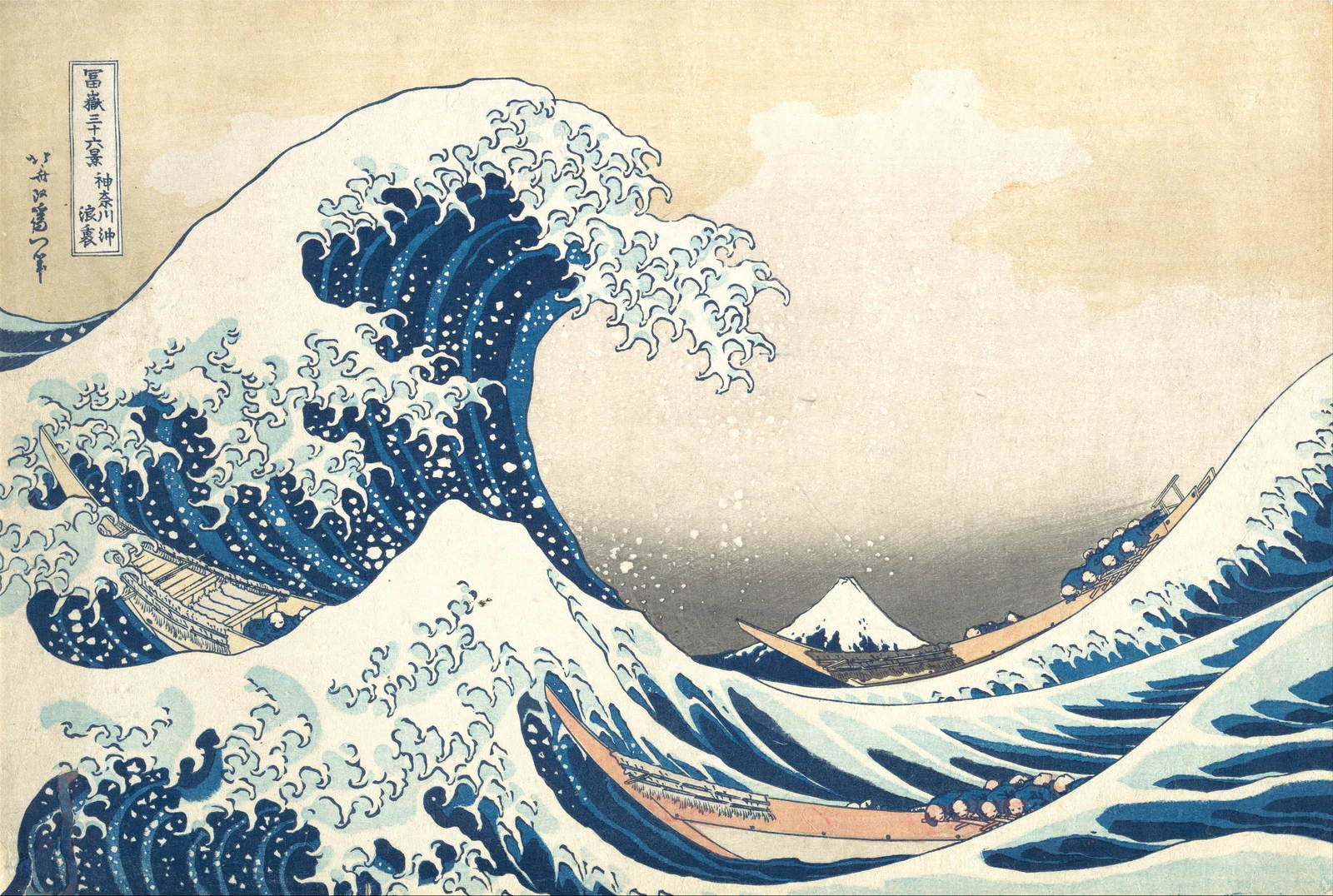
Under the Wave off Kanagawa (Kanagawa oki nami ura), also known as The Great Wave, from the series Thirty-six Views of Mount Fuji (Fugaku sanjūrokkei)
- Maker
- Katsushika Hokusai
- Date
- ca. 1830–32
- Collection
- The Metropolitan Museum of Art
- Accession
- JP1847
- Credit
- H. O. Havemeyer Collection, Bequest of Mrs. H. O. Havemeyer, 1929
- Rights
- CC0
A blue that crossed borders.
A connection attributed in the research
Read the visual essayCompare a different kind of transformation.
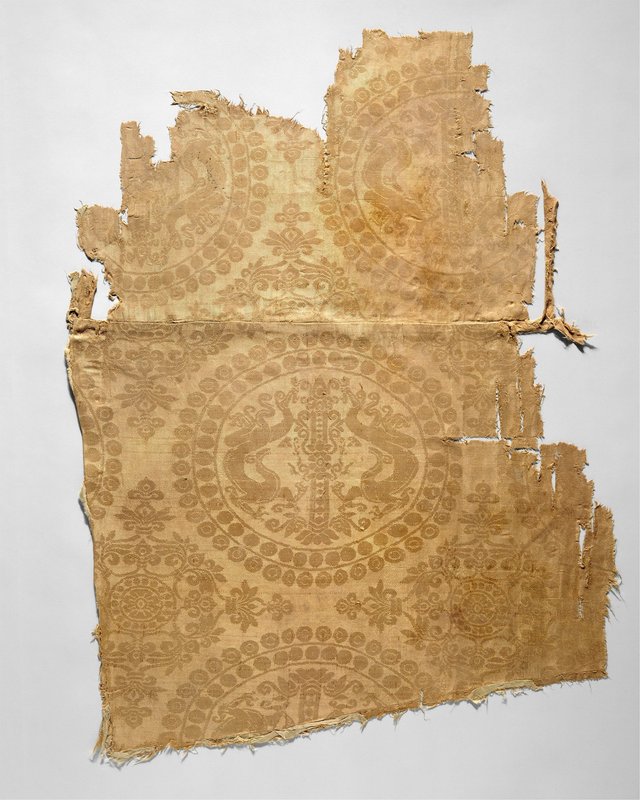
Textile with Pearl Roundels with Dragons
- Maker
- Maker unrecorded
- Date
- late 8th–9th century
- Collection
- The Metropolitan Museum of Art
- Accession
- 1998.147
- Credit
- Purchase, Barbara and William Karatz Gift, 1998
- Rights
- CC0
A border outlives an empire.
A connection attributed in the research
Open the connection study